
Panamint Dunes – Death Valley National Park
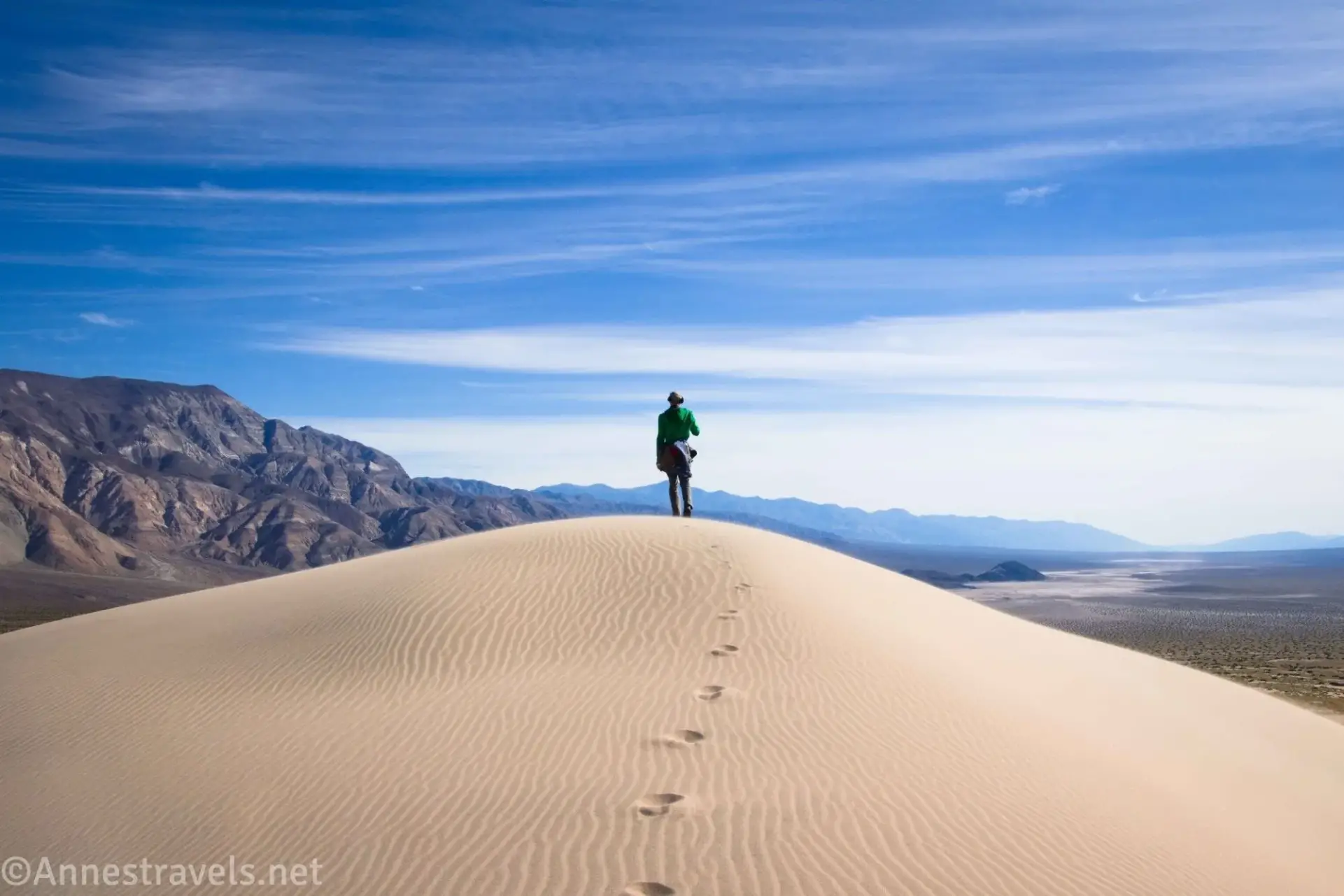
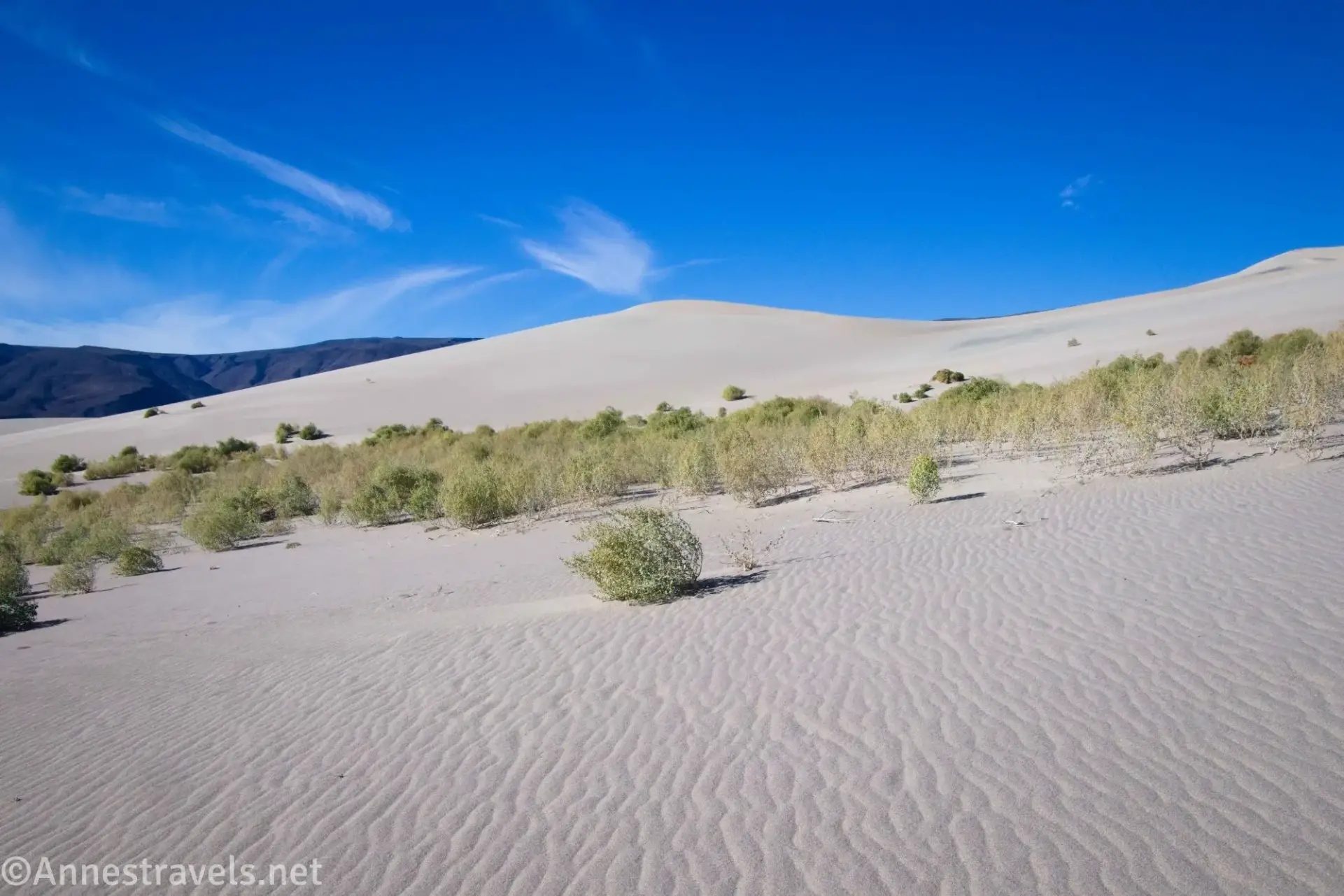
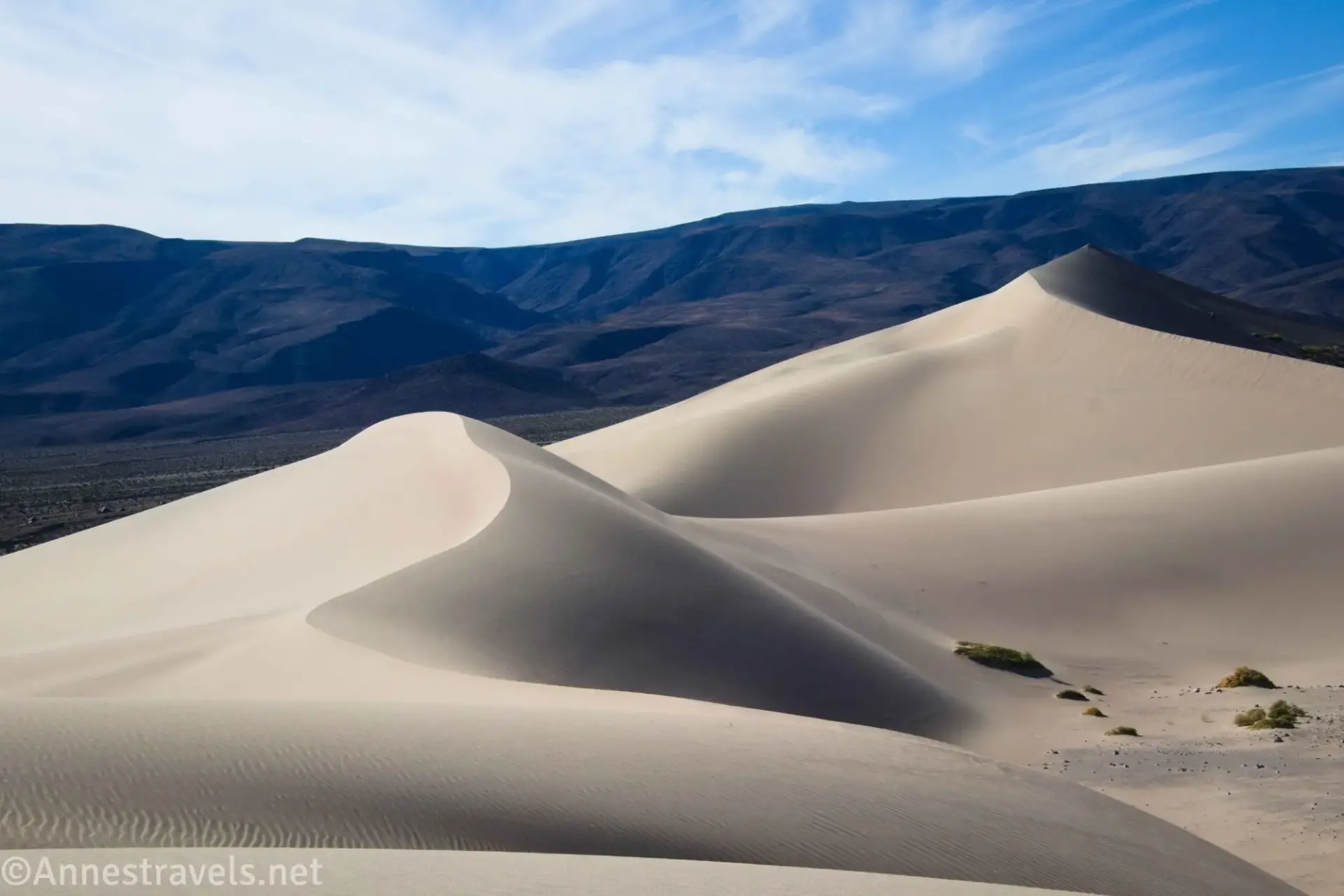
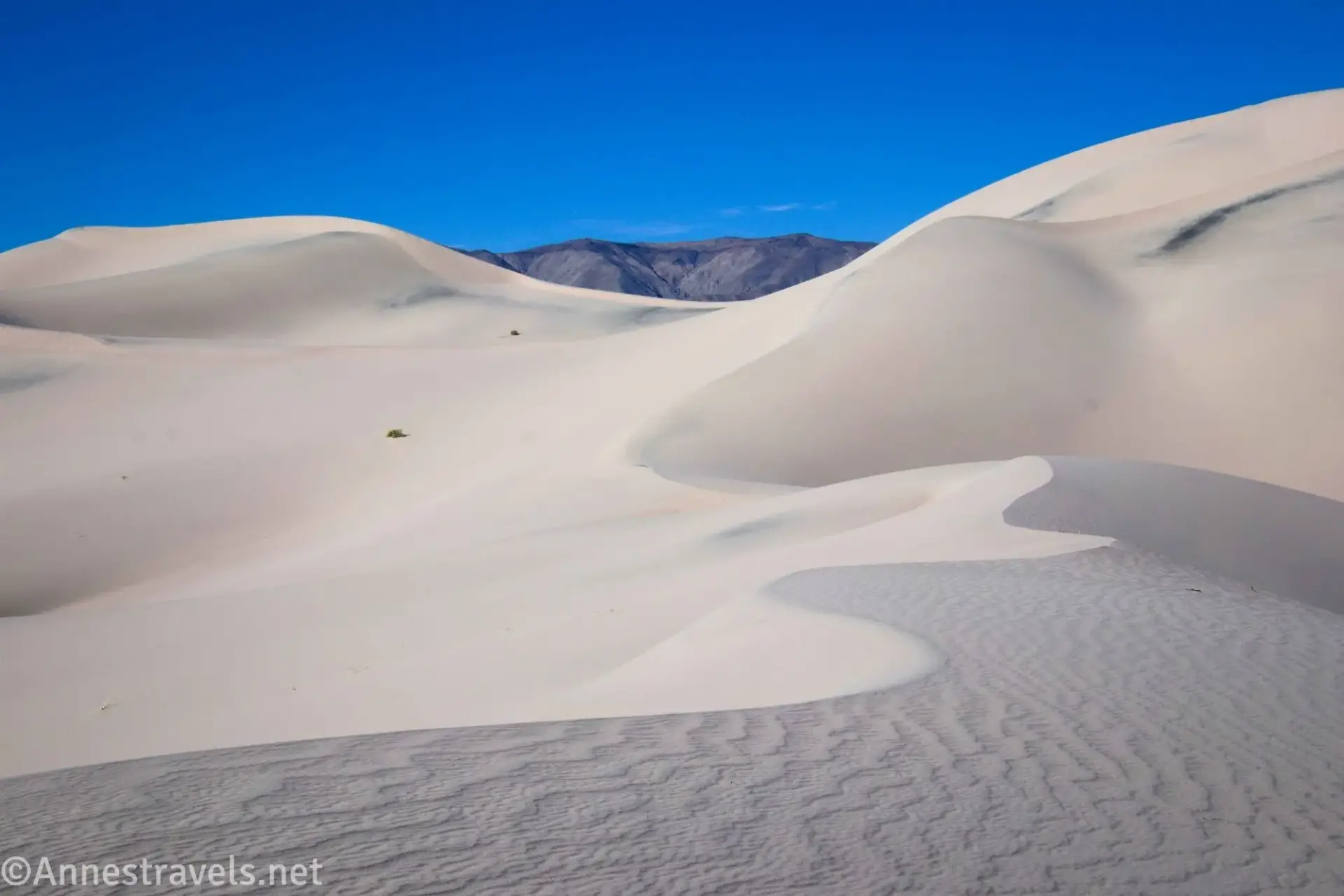
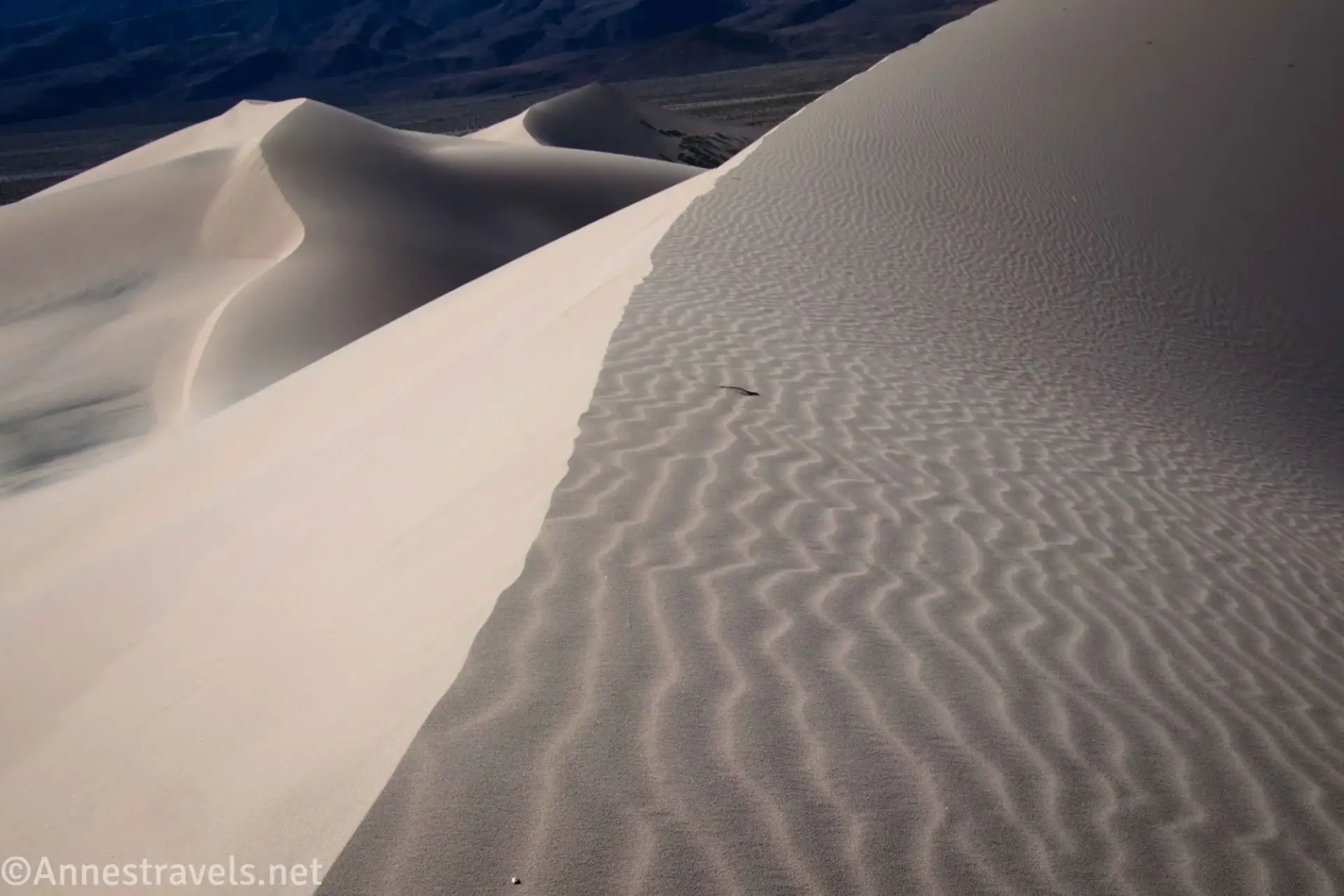
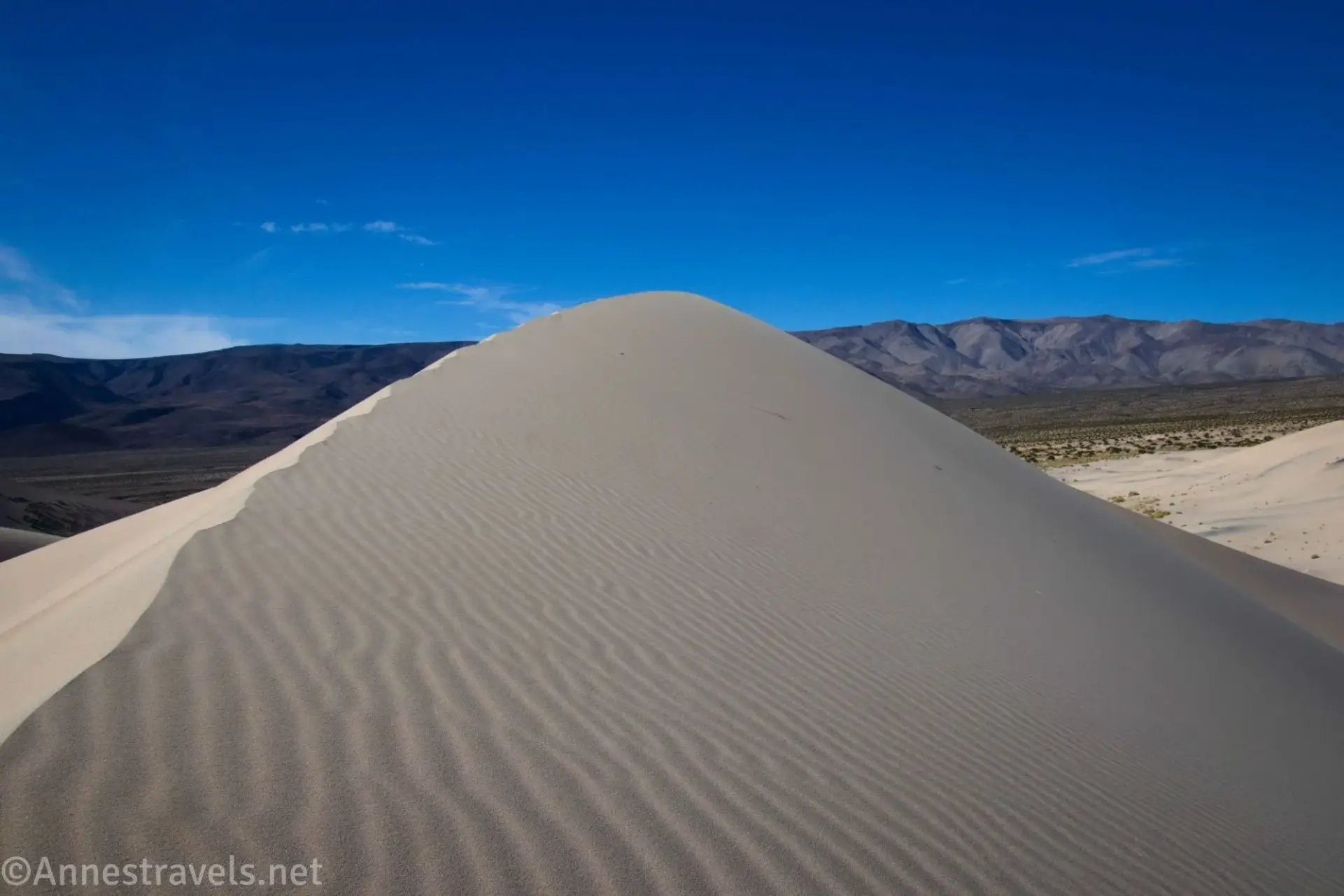
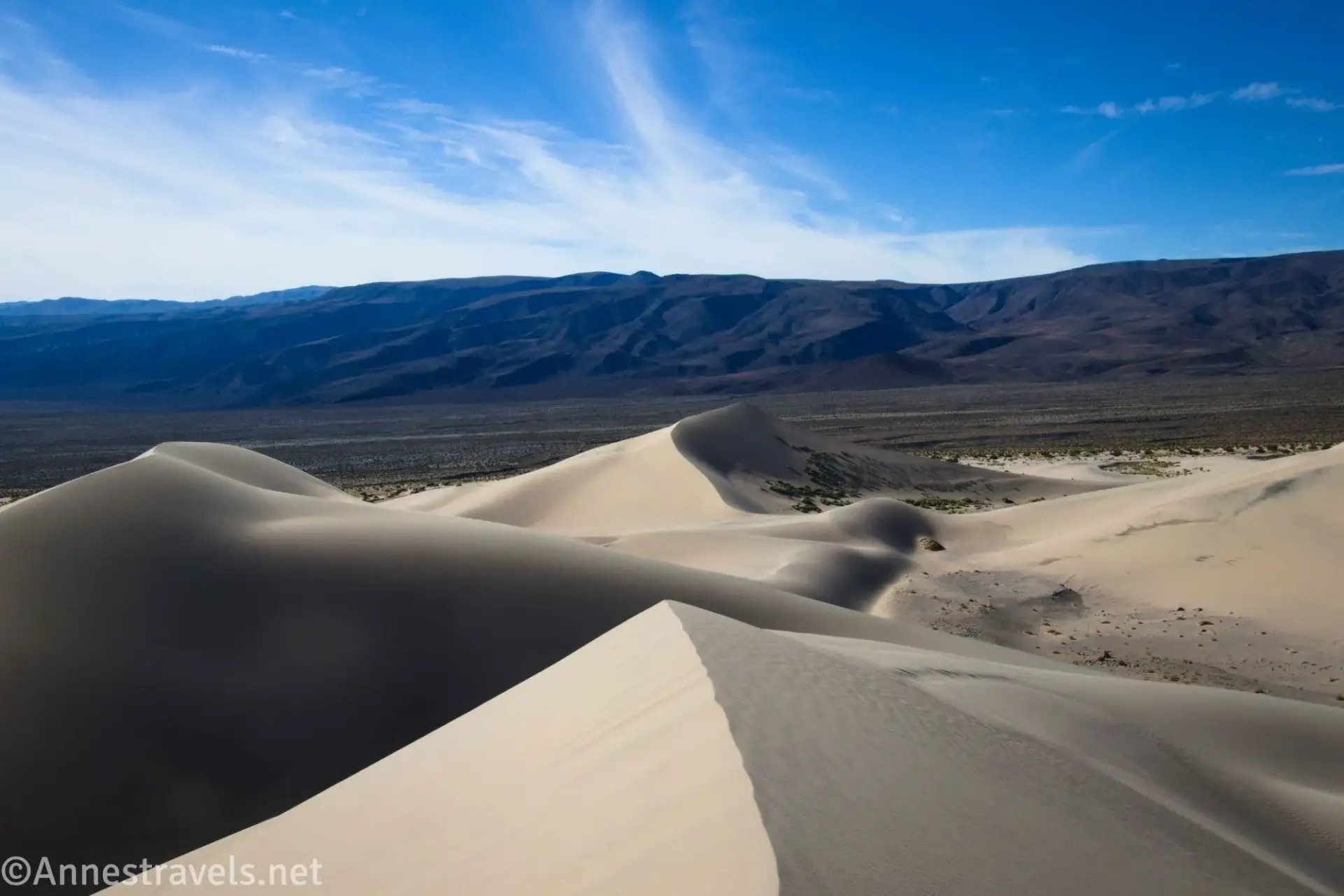
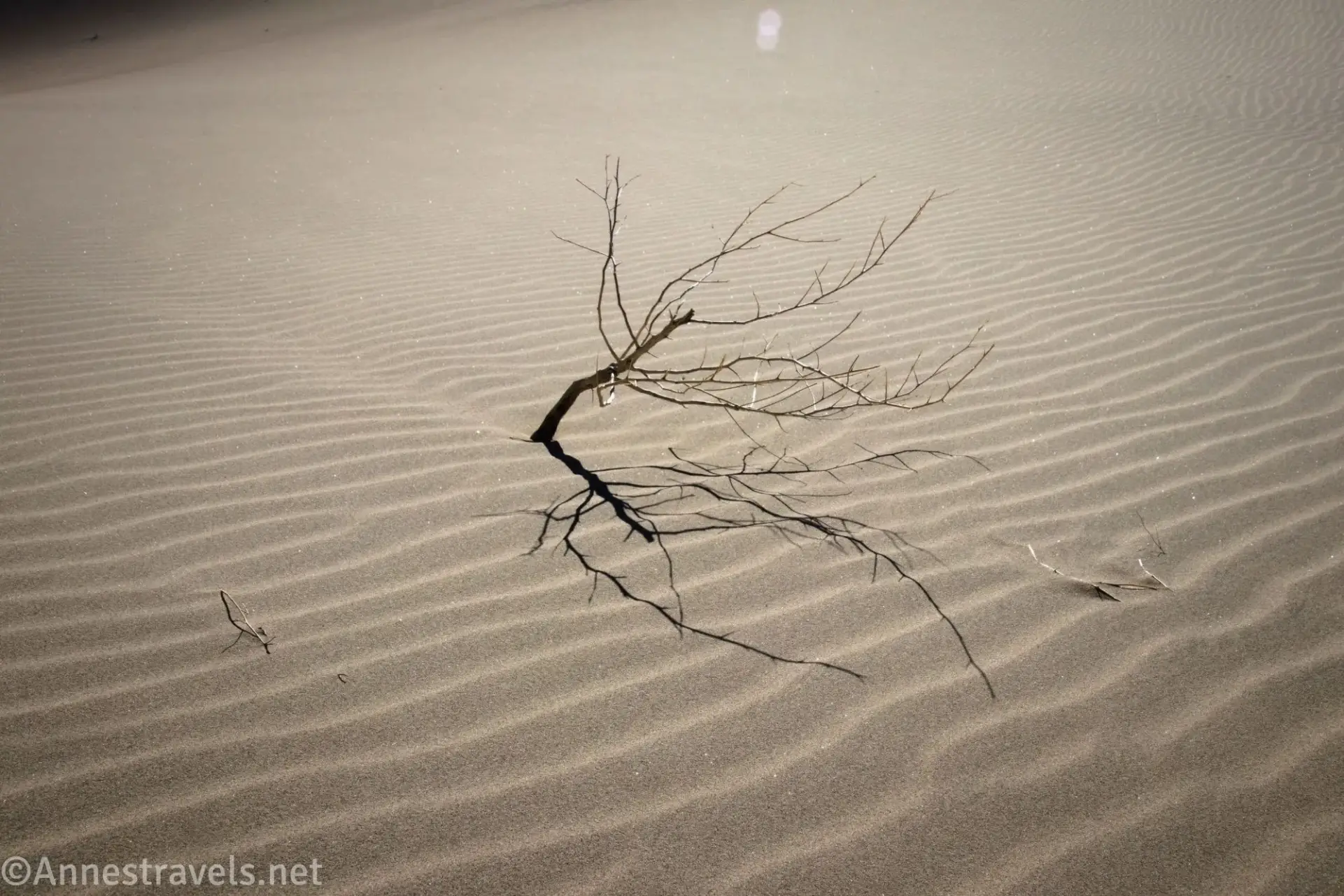
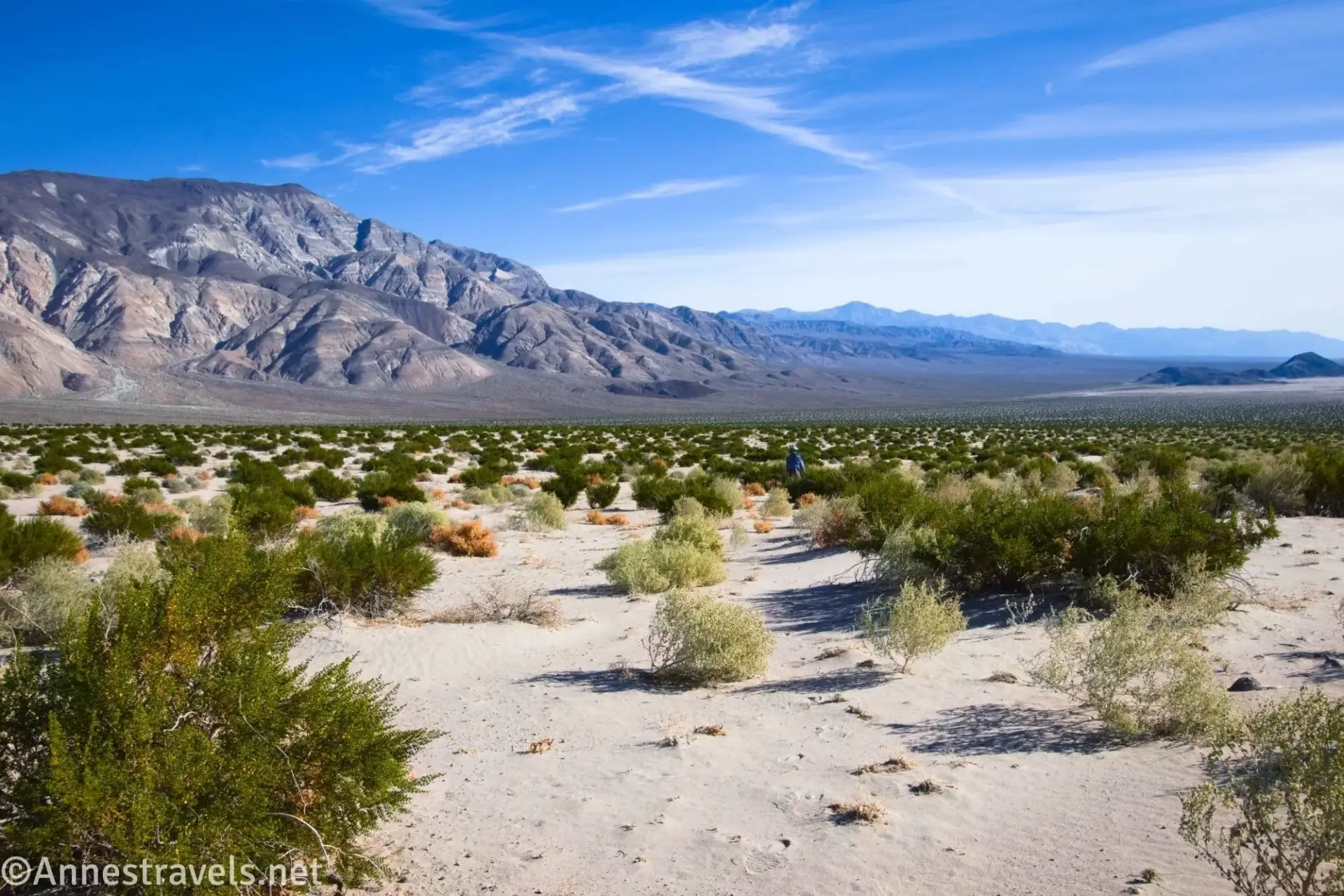



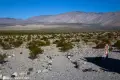
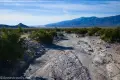
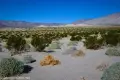
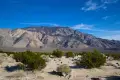

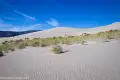



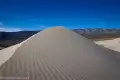
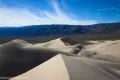

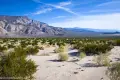


The Panamint Dunes are the most remote and least-visited sand dunes in Death Valley National Park, tucked into the north end of Panamint Valley beneath rugged desert peaks.
| Total Distance: 7.8 miles out & back | Elevation Gain: 1,186ft. (1,587ft. to 2,659ft.) |
| Difficulty: Moderately Strenuous | 5-10 Mile Difficulty: Strenuous |
| View Rating: 5.0 out of 5.0 stars | Author’s Rating: 4.0 out of 5.0 stars |
| Visitor Rating: (Click to rate) [Total: 0 Average: 0] | Visitor Difficulty Rating: (Click to rate) [Total: 0 Average: 0] |
| Pets: No | Horses: Horses not allowed on dune field |
| Best Seasons: November-April | Special Permits: None |
| Water Availability: None | Overnight Options: Dispersed camping permitted except on dunefield |
| Trailhead Amenities: None | Crowd Factor: Solitude |
| Trailhead Access: 1.4 High clearance-apreciated dirt/gravel road | |
Uses:     | Trail Surface:       |
Features:  | Hazards:      |
Mile-by-Mile: Panamint Dunes
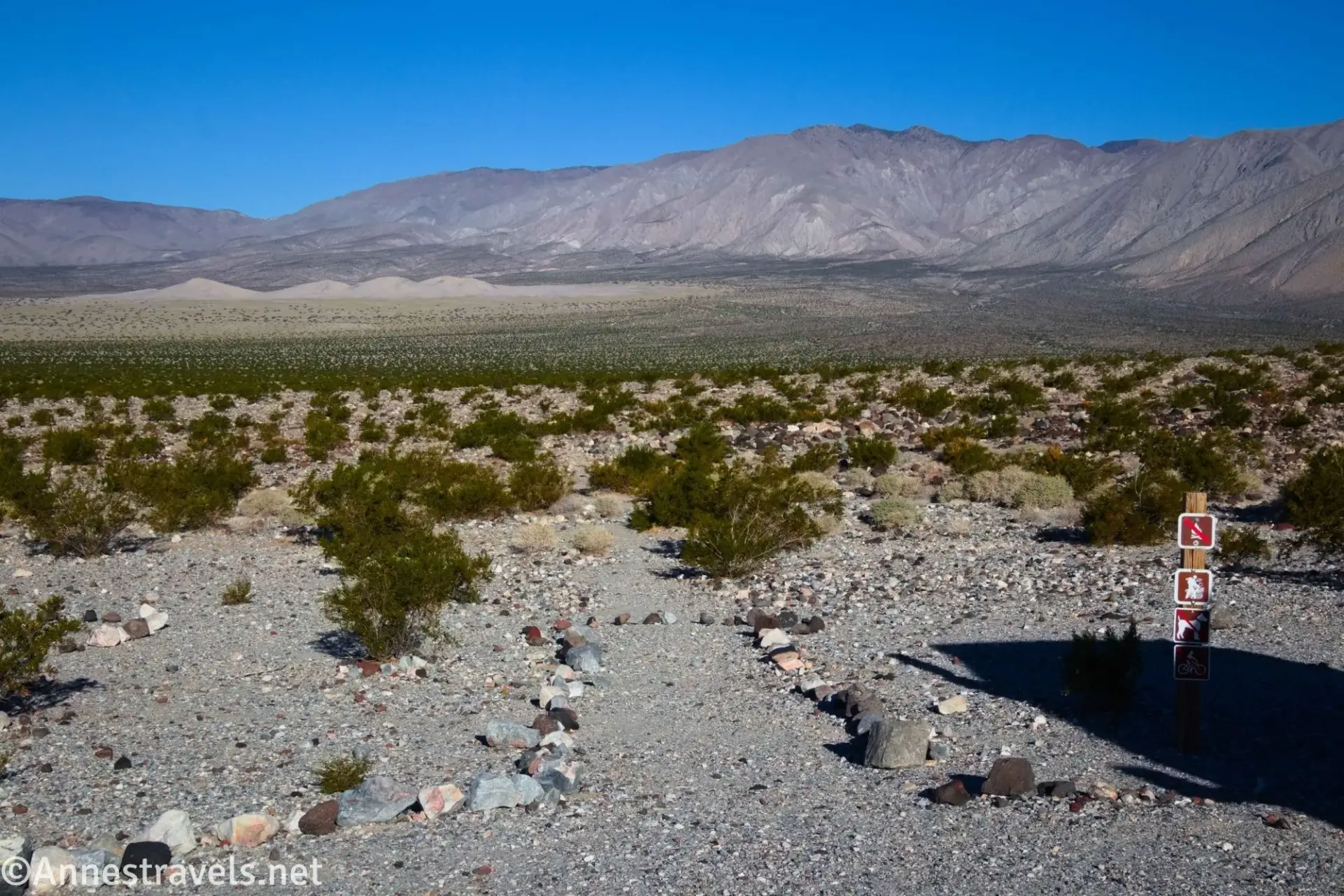
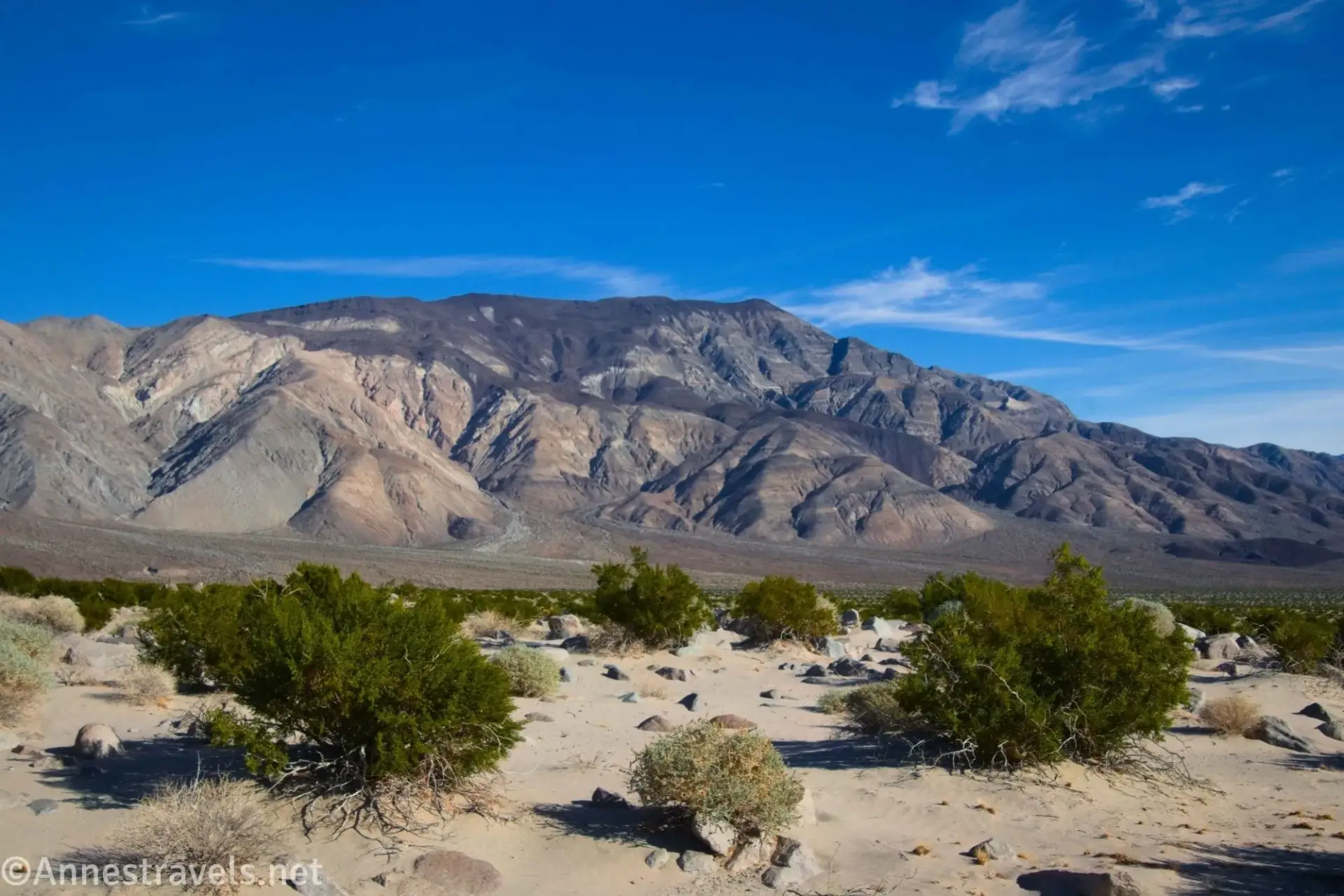
0.0 Panamint Dunes Pulloff on the Lake Hill Road (1,591ft.). You can see the sand dunes from the parking lot. A trail heads northwest across the desert for about half a mile. After this, it’s up to you to head generally in the right direction as the terrain descends and then begins a slow but steady uphill. The tread is often gravely and soft, which makes hiking more difficult, though the grade is gentle most of the time, working its way through greasebrush. Don’t be deceived by how close the dunes look from the parking area – they’re a good 3+ miles away. (36.4213220°, -117.4121860°)
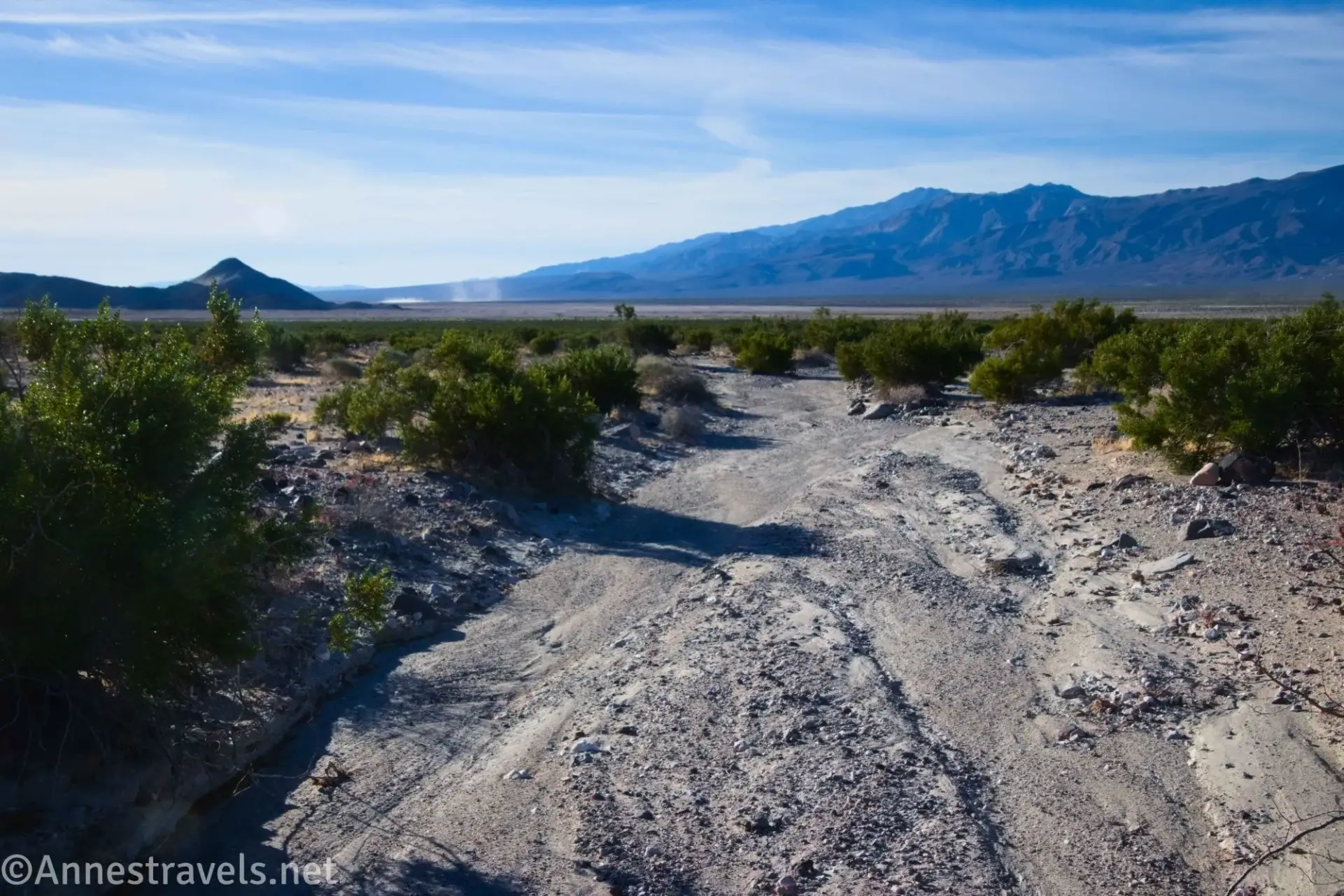
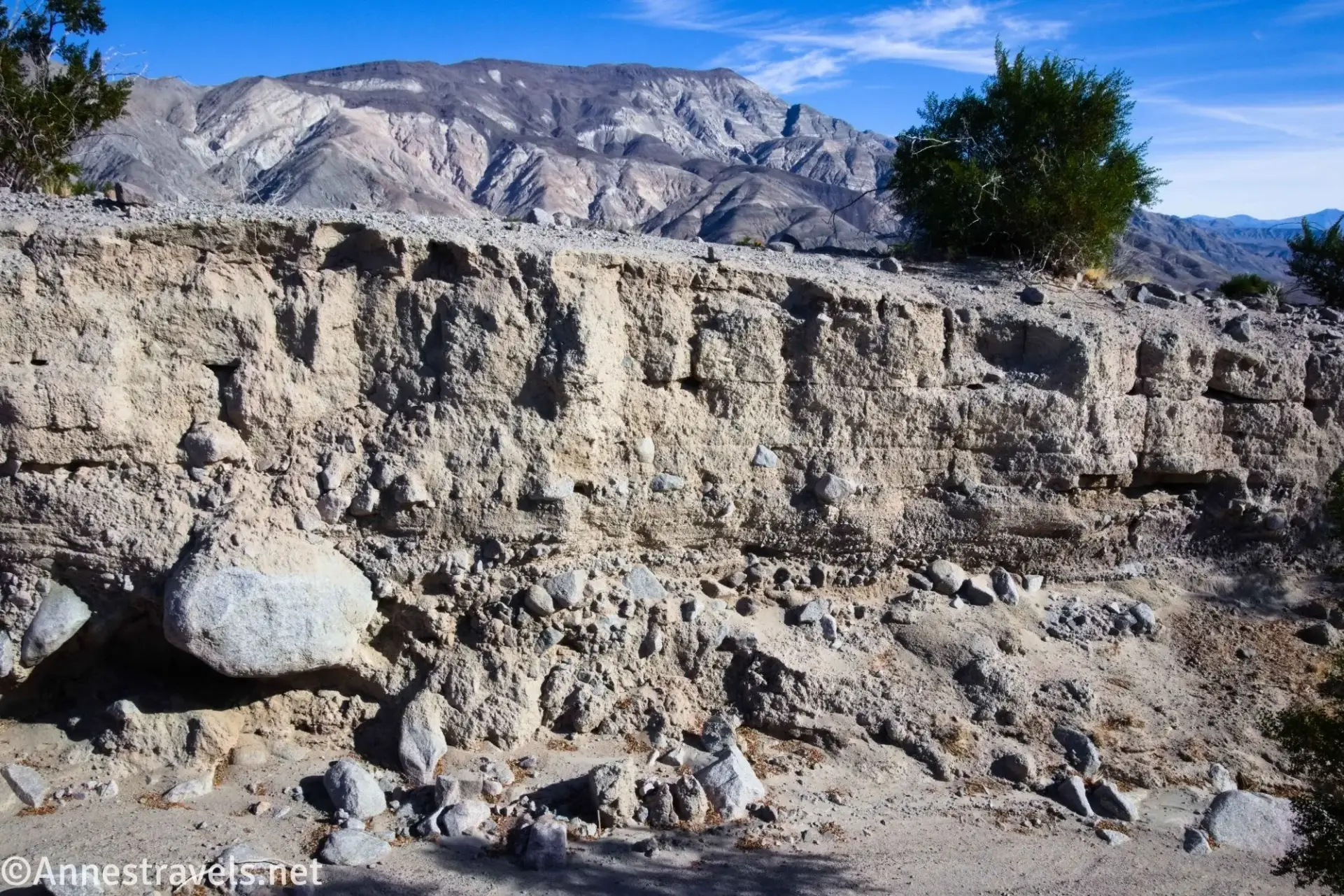
2.2 Deep Wash (1,875ft.). There are a few deeper washes before this, but try to cross here or downstream in this wash; upstream (north), the wash is deeper and more difficult to cross. Continue to head northwest toward the sand dunes. The closer you get to the Panamint Dunes, the more sandy the soil beneath your feet becomes. (36.4444040°, -117.4359660°)
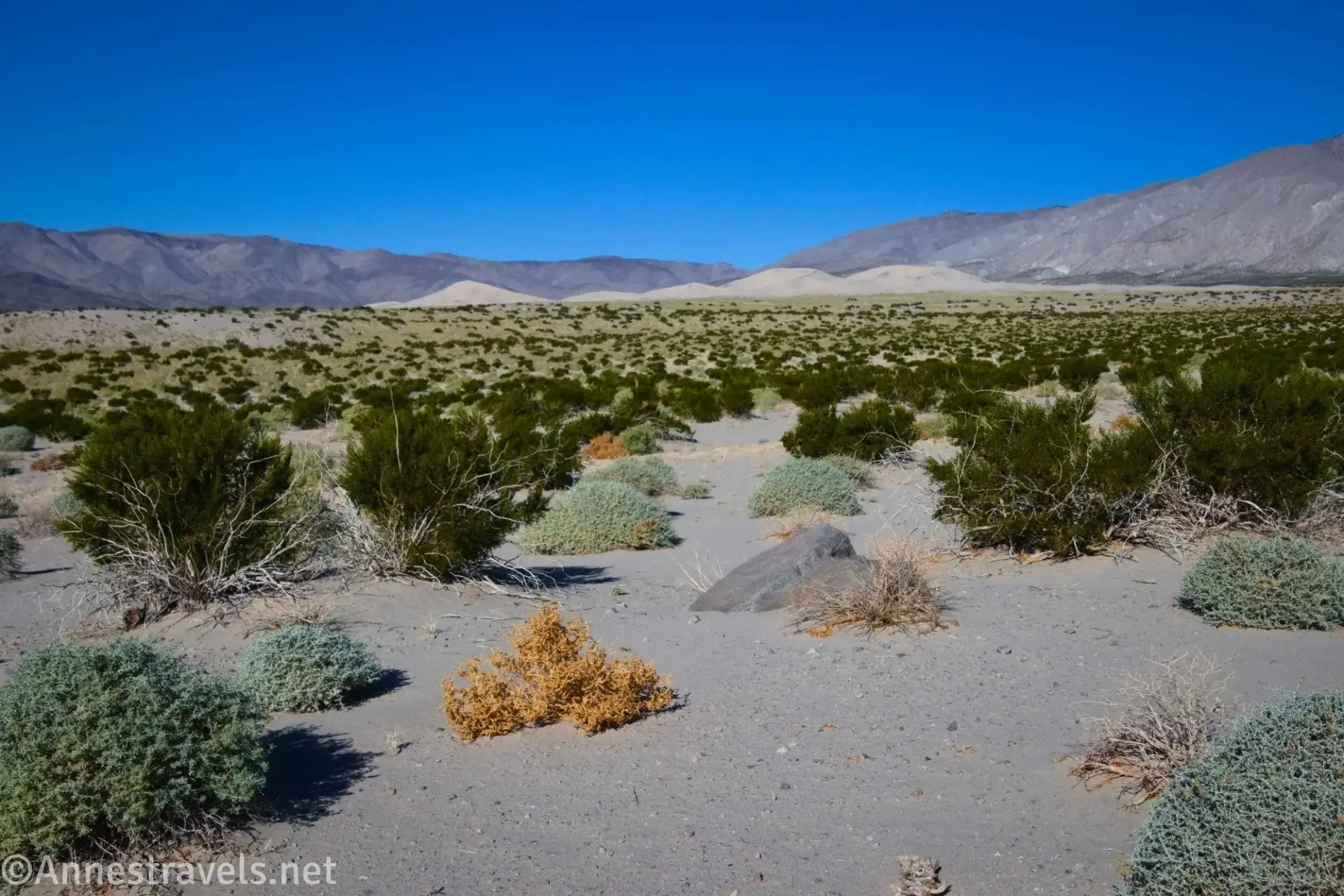
3.5 Approximate edge of the Panamint Dunes (2,393ft.). Explore to your heart’s content. This guide goes to one of the higher dunes. Try to follow the ridgelines, as they tend to be easier hiking than the steep, shifting slopes going straight up the sand dunes. (36.4584880°, -117.4507580°)
3.9 Top of a high dune (2,659ft.). njoy views of Panamint Valley, the Panamint Playa, Lake Hill, and the Panamint Mountains including Telescope Peak to the south, the Argus Mountains to the west, and the Cottonwood Mountains to the north and east. Then take on the really fun part – jumping back down the dunes like a little kid! (36.4615210°, -117.4553380°)
History & More
Many people hike to the dunes as an overnight trip so they can enjoy the sand dunes in the cool of the morning (just remember that no camping is permitted on the dune field). Whether as a day hike or a backpacking trek, I recommend only hiking this route in cooler times of year – usually November-April – as the route is very exposed and not at all what you want to do in the heat of the day.
While the Panamint Dunes may be the least-visited of the major dune fields in the park, you may still encounter people, especially during busy seasons.
Like most sand dunes, these shift and reform themselves constantly. On a windy day, it’s likely you’ll see the sand blowing atop the dunes.
Download Route Map
Coming soon!
Driving Directions
Follow the Lake Hill Road for 5.75 miles from CA-190. Park in the unmarked (but very official) pulloff on the left (west) side of the road.
Camping is not allowed within one mile of a paved road, developed area, or dirt road that is closed to camping.
Camping is not permitted within 100 feet of a flowing stream, spring, or other natural body of open water.
No camping is permitted on the floor of Death Valley, within one mile of Darwin Falls and Greenwater Canyon, on the active/shifting sand dunes, and certain other canyons and backcountry areas.
Camping is also prohibited within one mile of the Ubehebe Lead Mine, Leadfield Mines, Keane Wonder Mill, and Skidoo Mill.
Camping is limited to 30 days per calendar year within the park.
Fires are permitted in NPS-provided fire grates or grills ONLY.
Leave No Trace Principles are enforced
Drones and model aircrafts are prohibited
Camping is permitted only in designated sites or in areas open to dispersed backcountry camping
All park rules and regulations
12 Month Pass: $55/Death Valley Annual Pass (valid at Death Valley National Park). $80/America the Beautiful Annual Pass (valid at all national park and federal fee areas). $20/Annual Senior Pass (62 years or older US citizens; valid at all national park and federal fee areas). Free/4th Grade Pass (Valid Sept. 1-August 31 of the child’s 4th Grade school year). Free/Military Pass (valid for all active military personel and their dependents with a CAC Card or DD Form 1173).
Lifetime Pass: $80/Lifetime Senior Pass (62 years or older US citizens; valid at all national park and federal fee areas). Free/Access Pass (available to all US citizens with perminent disabilities). Free/Access for Veterans and Gold Star Families Pass (valid for all military and veterans with a CAC card, Veteran HJealth Identification Card, Veteran ID Card, or veteran’s designation on state-issued drivers license or identification card.)