Palmer Canyon – Death Valley National Park
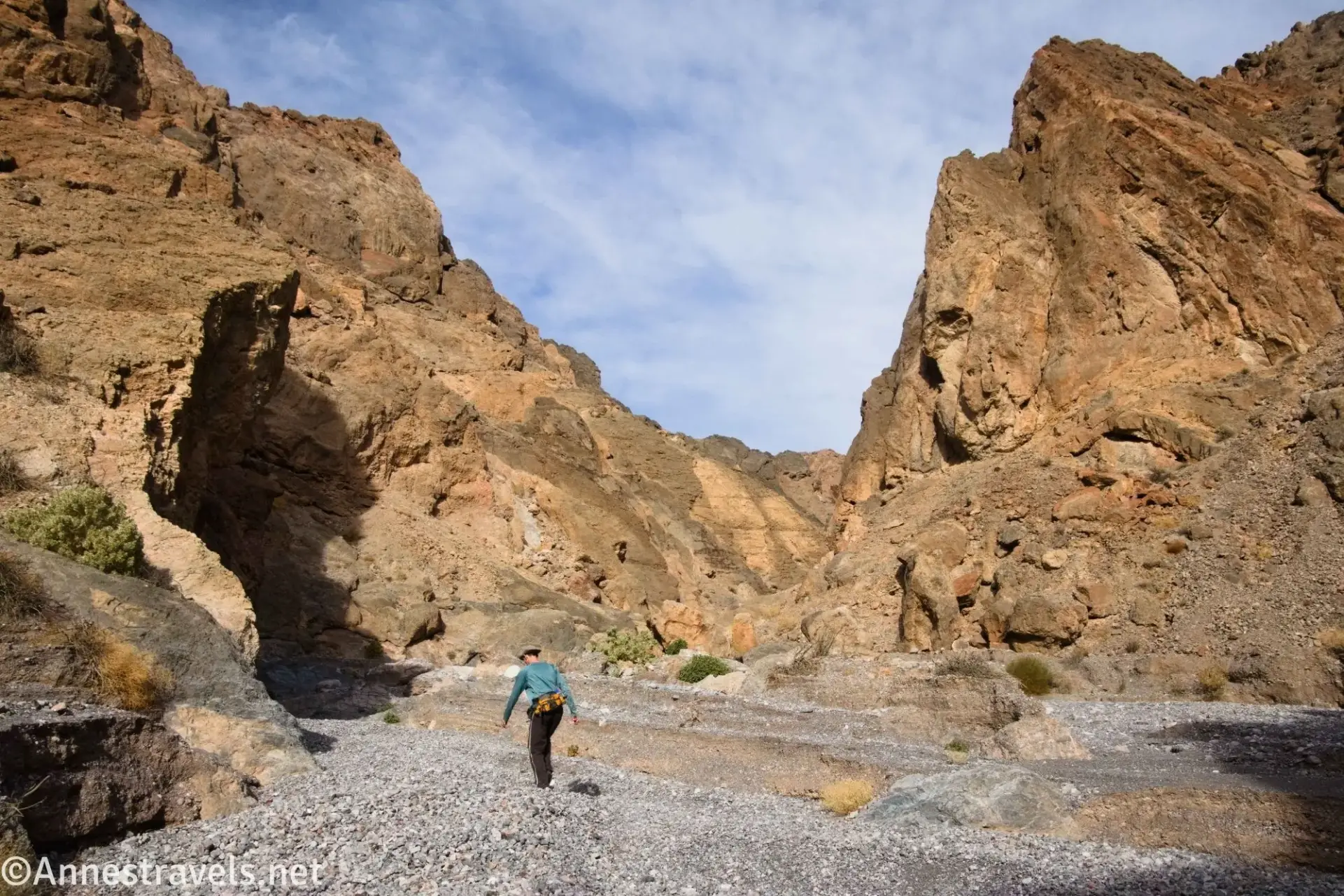
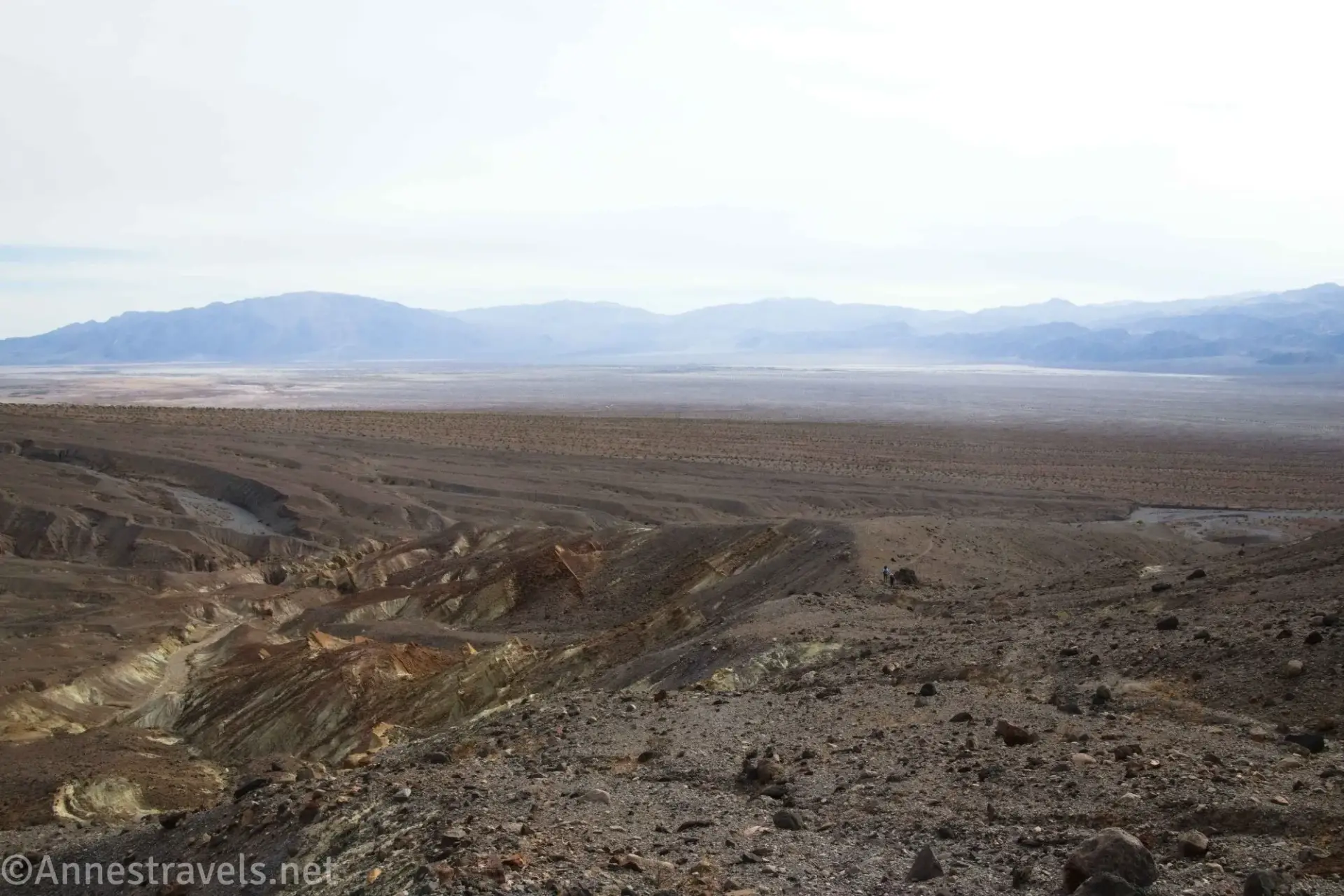
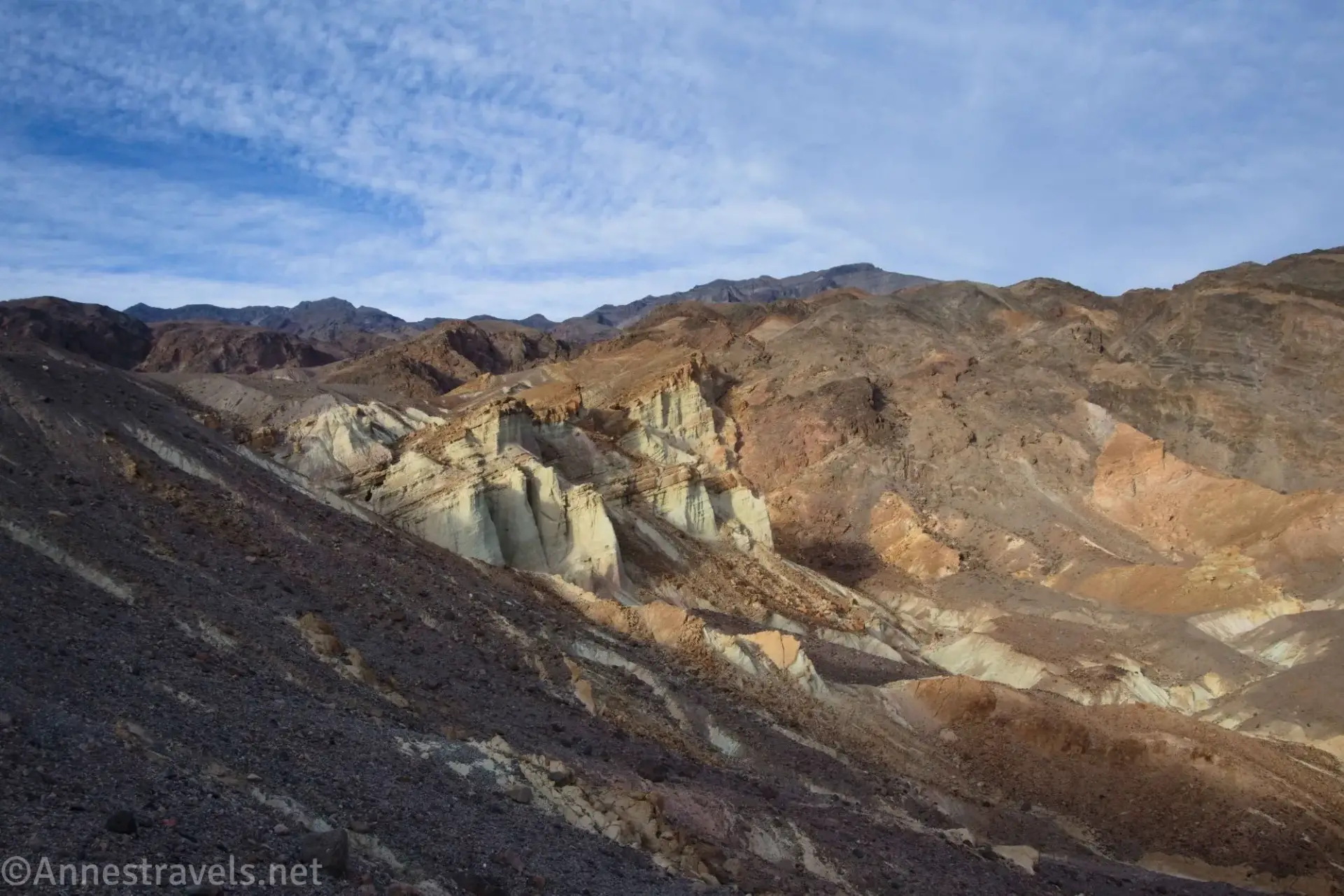
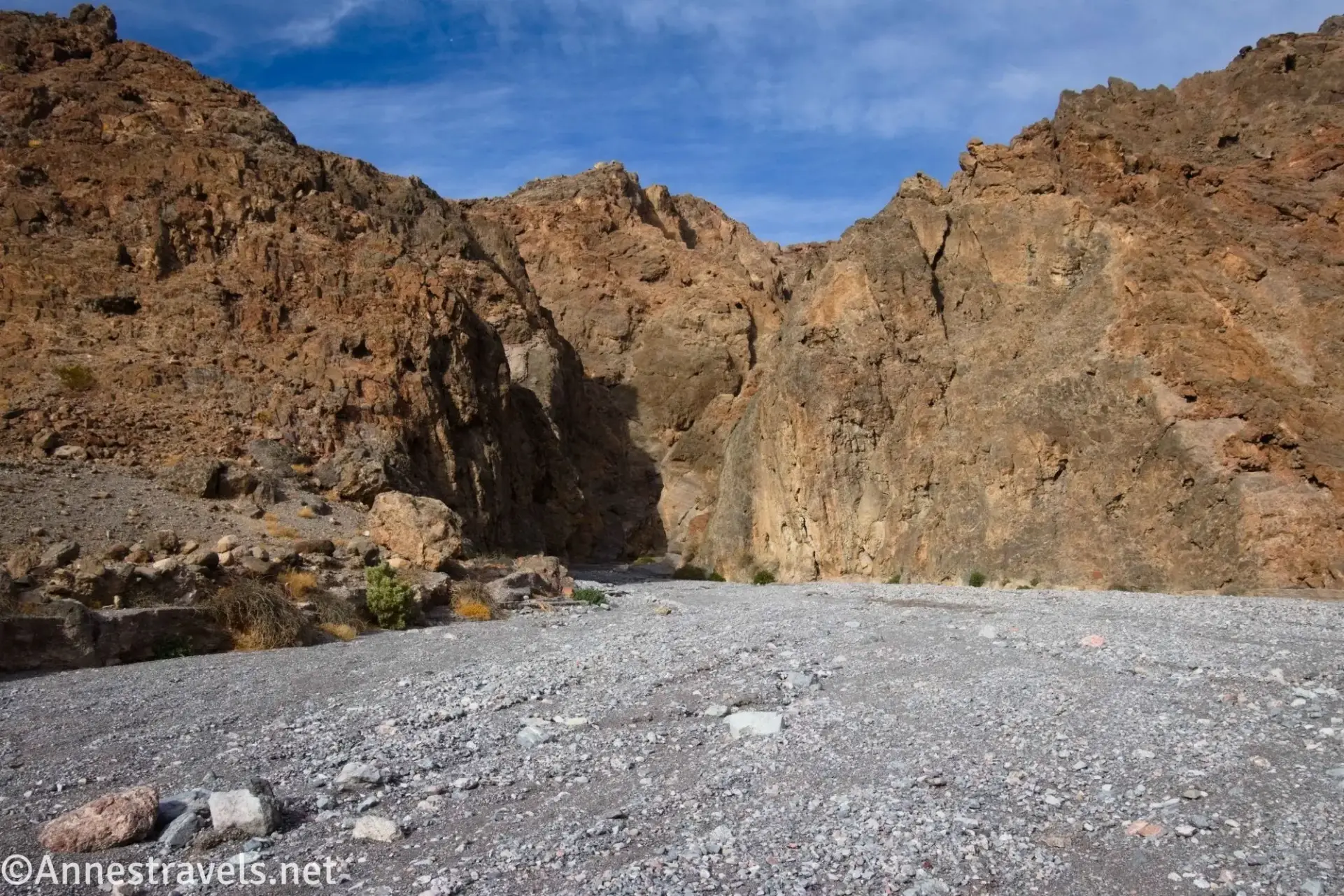
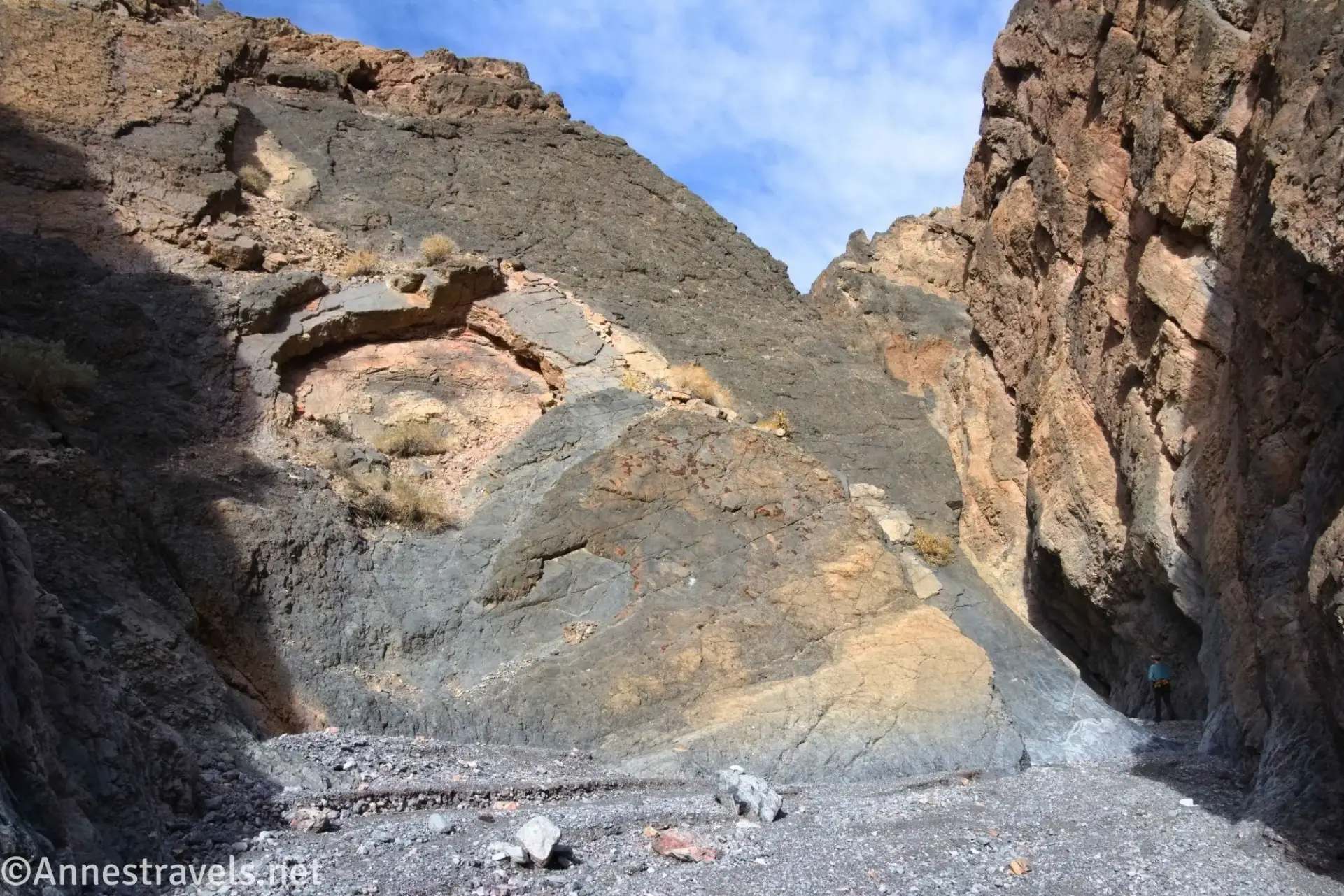
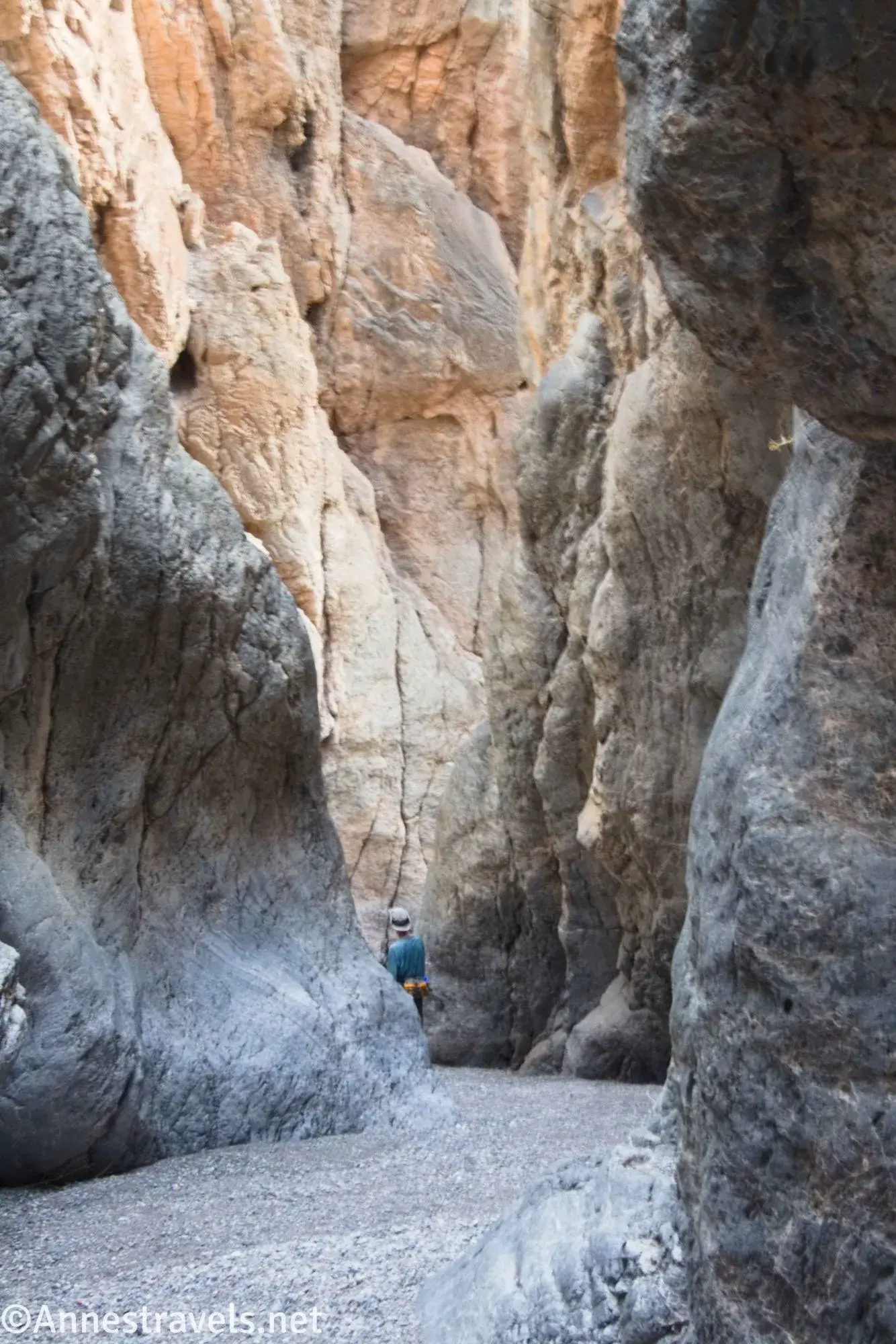
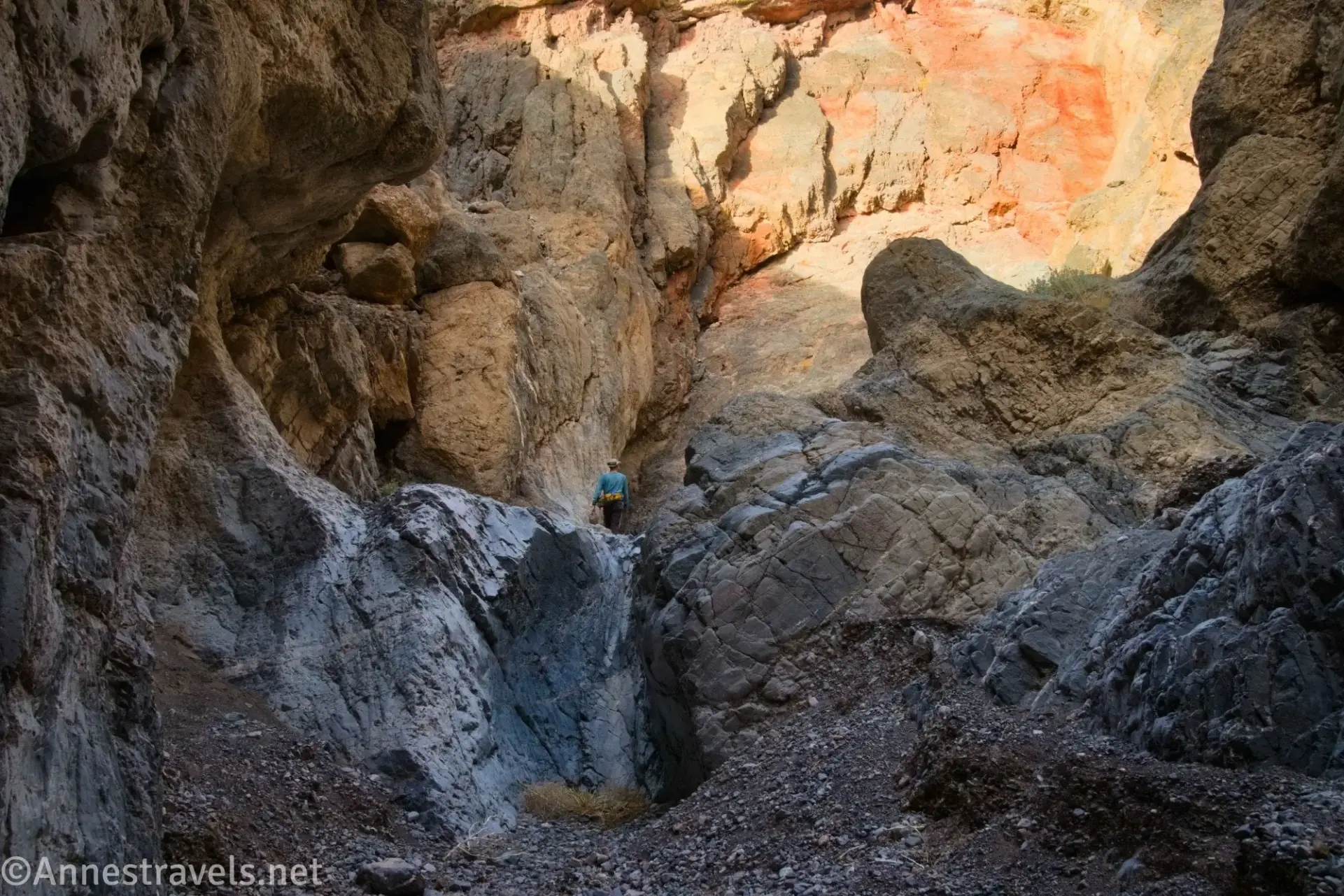
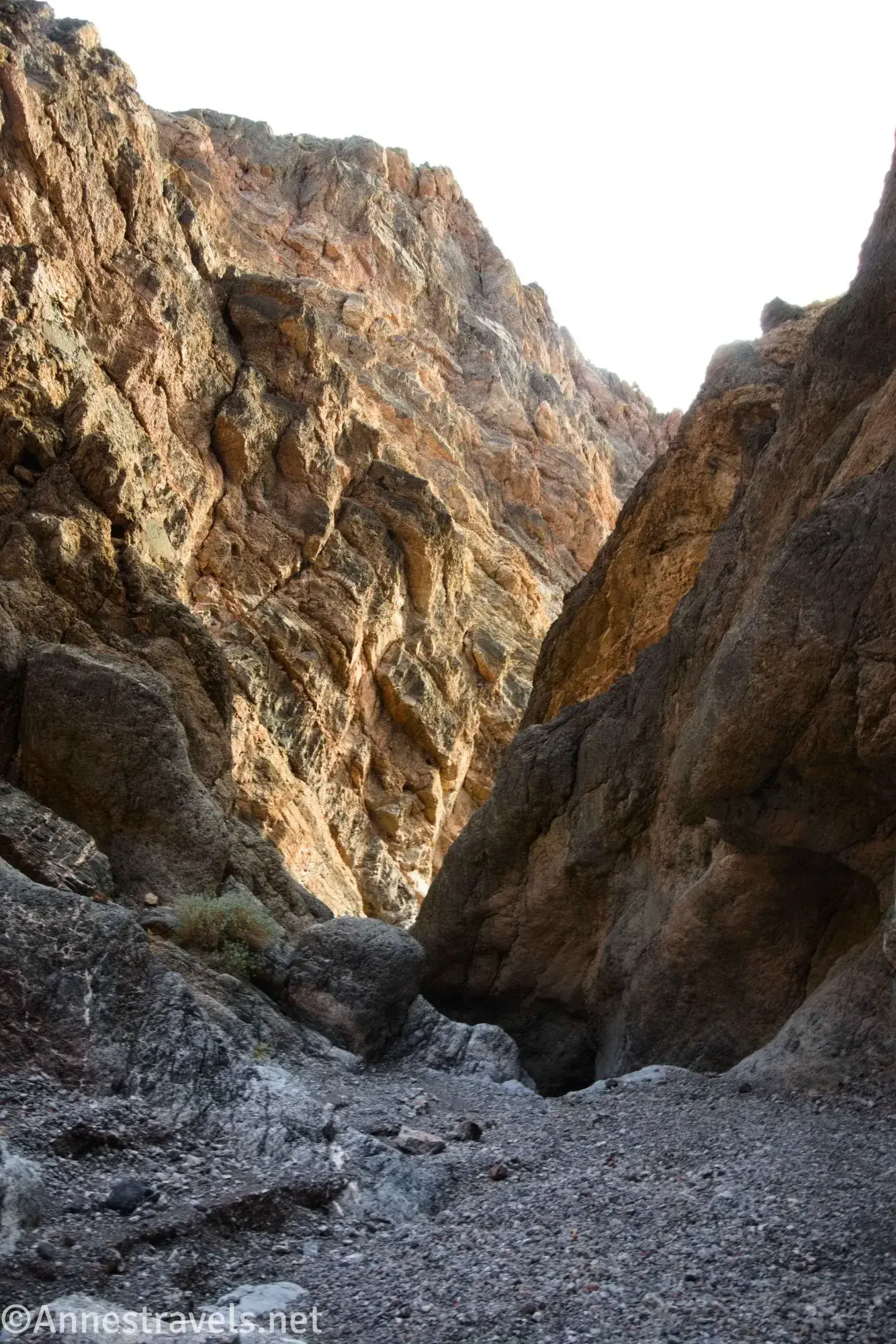
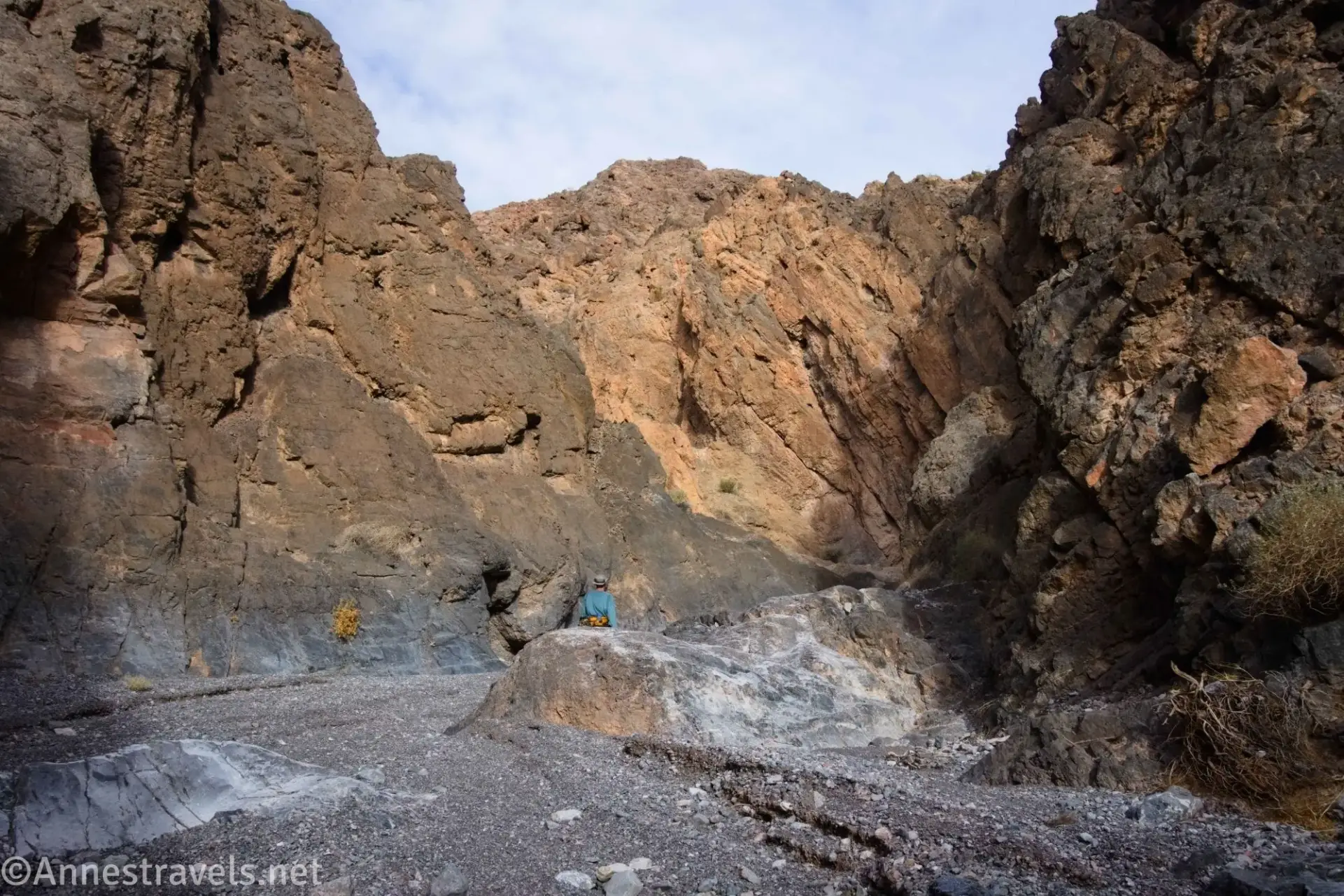
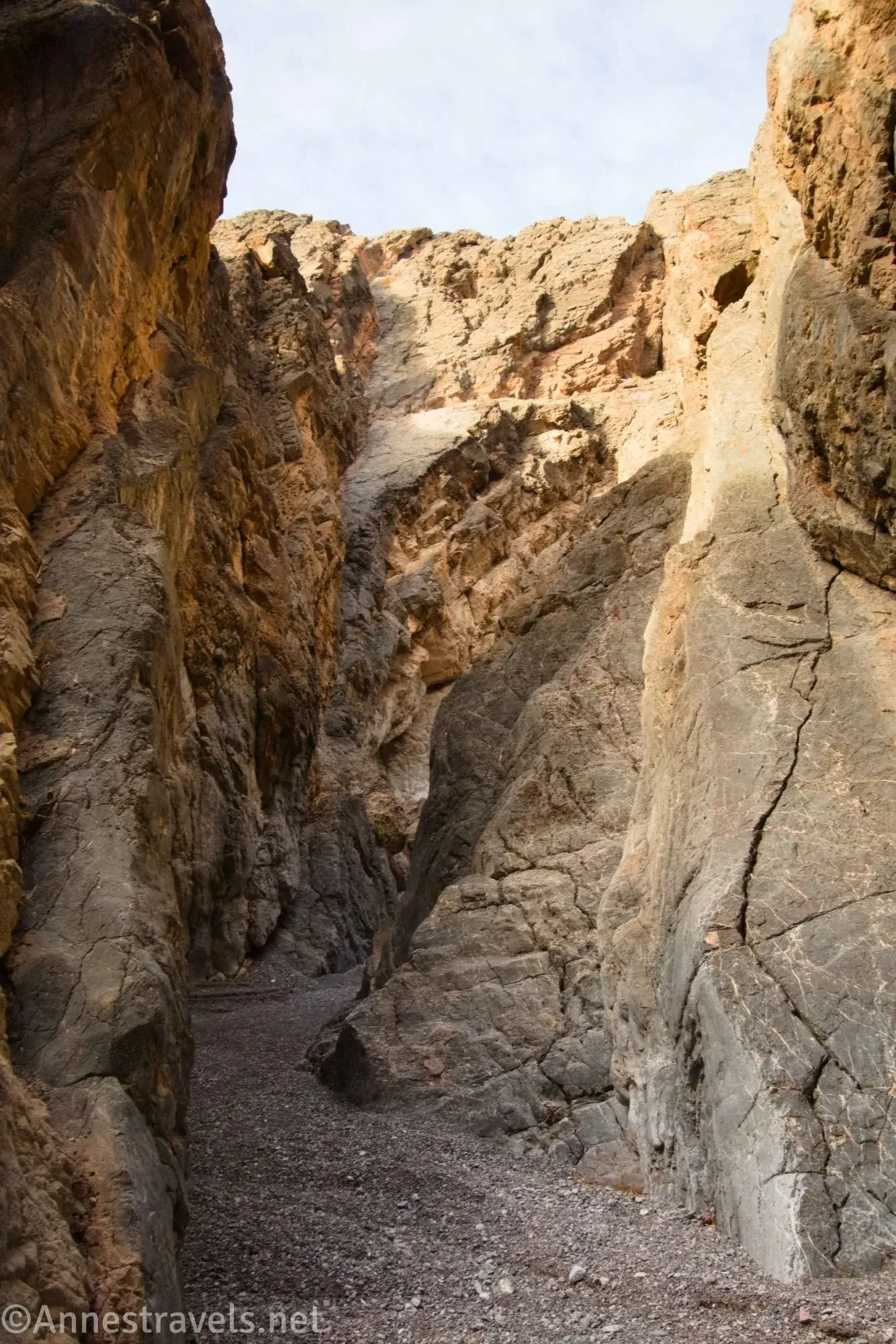
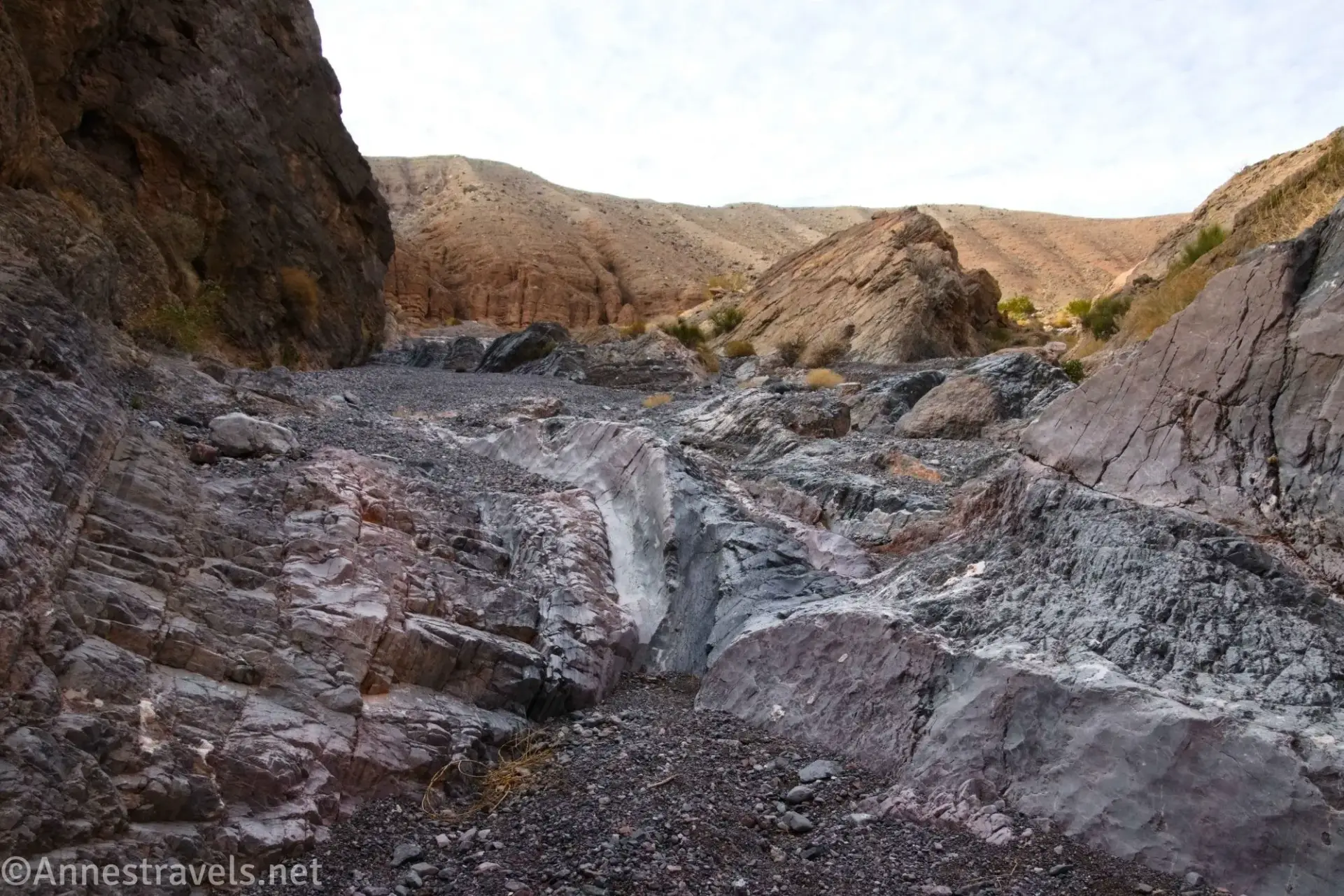
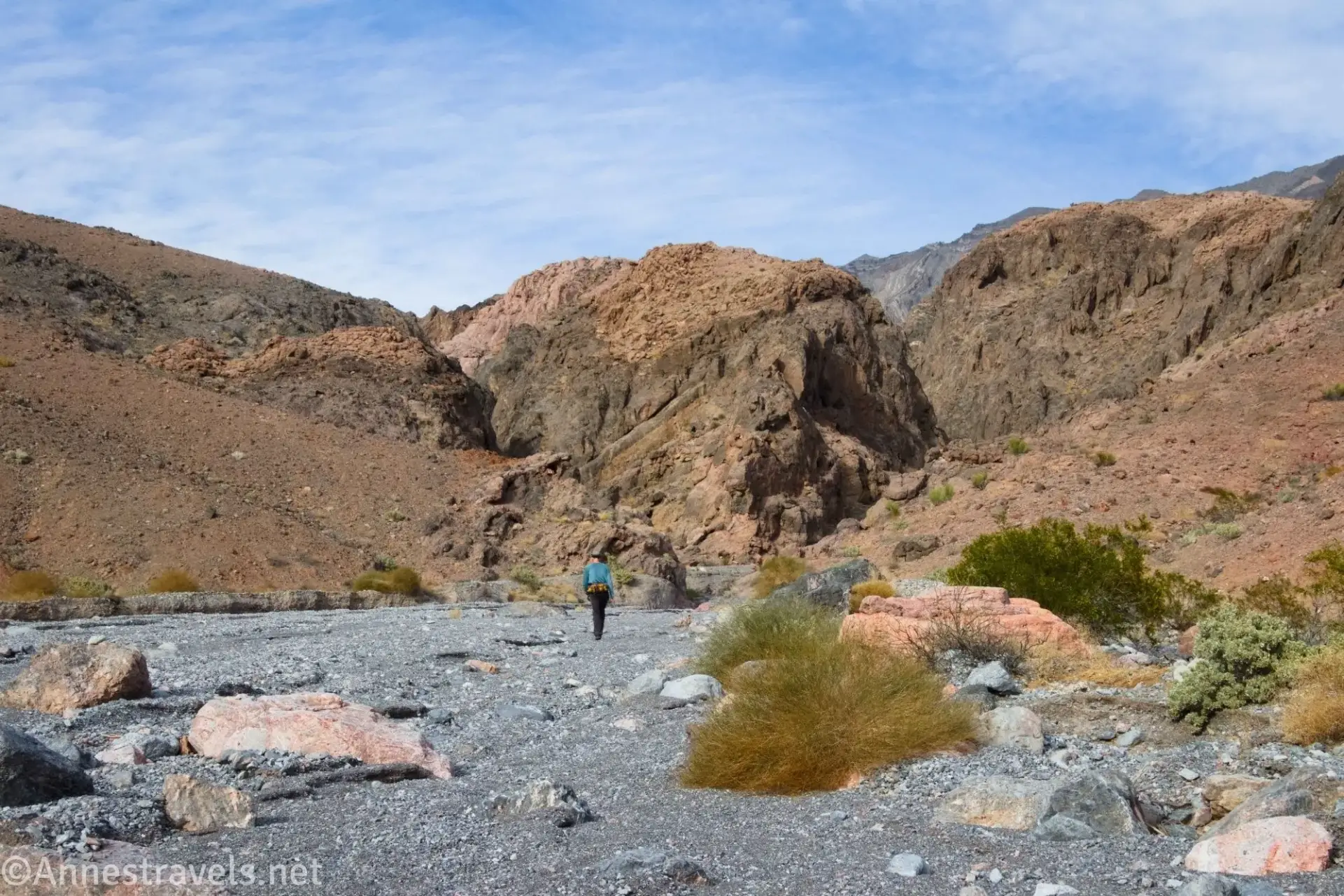
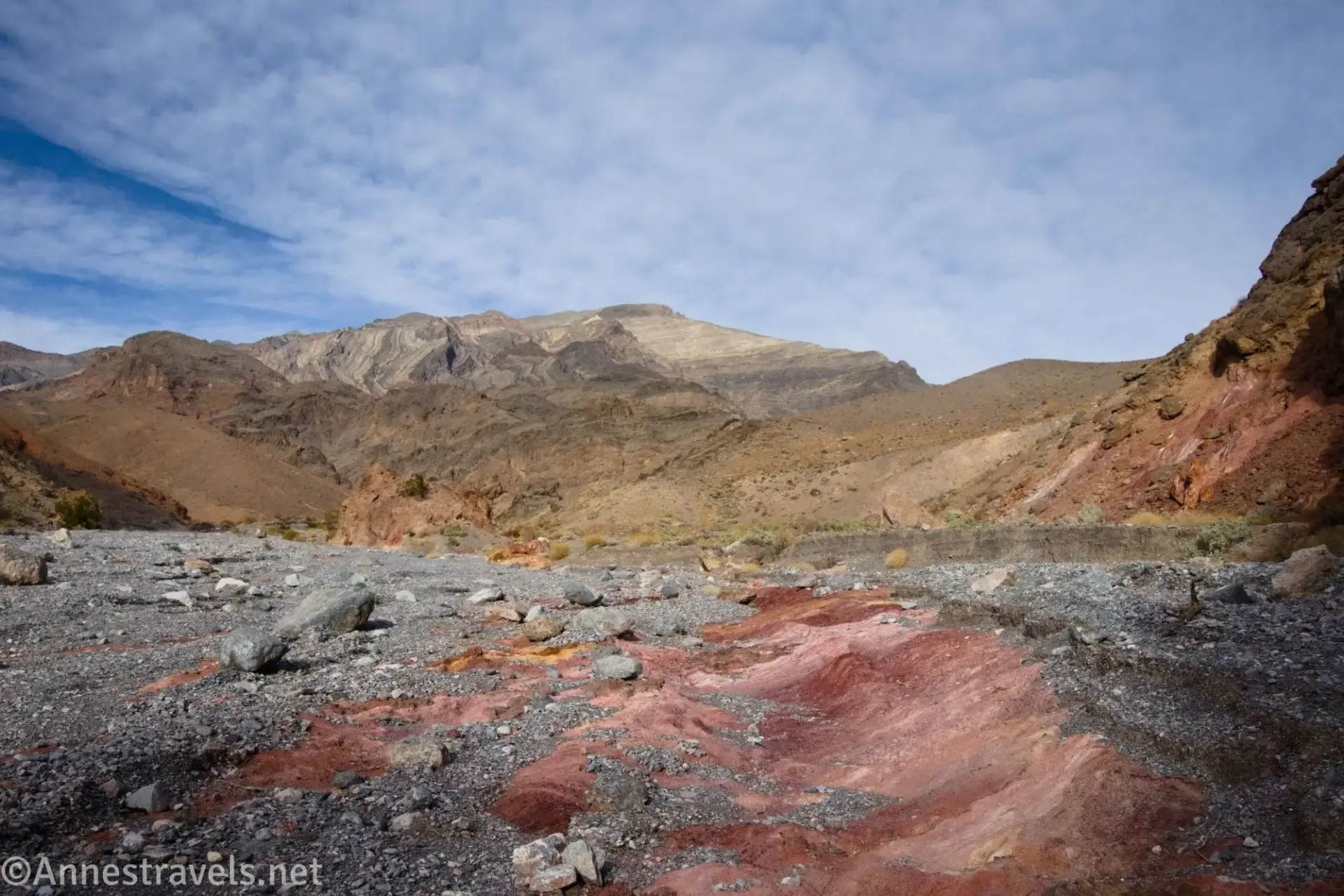


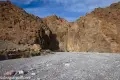
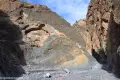
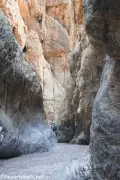
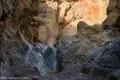
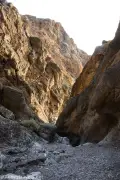
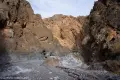
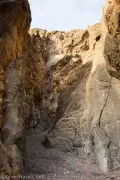
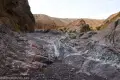
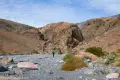
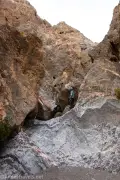
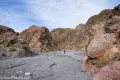
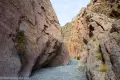
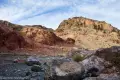
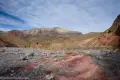


The next canyon north of Fall Canyon is almost as pretty and amazing as its more popular neighbor.
| Total Distance: 8.8 miles out & back | Elevation Gain: 3,292ft. (897ft. to 3,033ft.) |
| Difficulty: Very Strenuous | 5-10 Mile Difficulty: Extremely Strenuous |
| View Rating: 4.0 out of 5.0 stars | Author’s Rating: 4.0 out of 5.0 stars |
| Visitor Rating: (Click to rate) [Total: 0 Average: 0] | Visitor Difficulty Rating: (Click to rate) [Total: 0 Average: 0] |
| Pets: No | Horses: Yes |
| Best Seasons: November-April | Special Permits: None |
| Water Availability: None | Overnight Options: Dispersed camping permitted at least 1 mile from Fall Canyon |
| Trailhead Amenities: Primitive restrooms | Crowd Factor: Solitude |
| Trailhead Access: 1.2 Graded gravel road; suitable for low-clearance vehicles | |
Uses:     | Trail Surface:      |
Features:      | Hazards:      |
Mile-by-Mile: Palmer Canyon
0.0 Fall Canyon Trailhead (933ft.). The trailhead is located behind the primitive restroom. Follow the route to Fall Canyon; the path begins by rolling along the hillside, then drops into a wash. The old trail continues up the wash, while the new trail turns to cross over another hill and drop into the Fall Canyon Wash further upstream. This and a few social trails will all land you generally in the right place, so don’t worry about taking the exact right trail as long as it’s heading for the Fall Canyon Wash (generally north or northwest). (36.8221167°, -117.1740667°)
0.7 Fall Canyon Wash (1,188ft.). Drop into the wash. Instead of turning right, upcanyon, which would take you up Fall Canyon, cross the wash. Try to find a use trail up the hill on the other side (you may want to go downstream a bit to find a slightly lower bank to the wash before climbing the hill). From the top of the hill, enjoy the views over the southern Cauldron before following a possibly lightly cairned trail to the left that will eventually drop you down into the next gully (approx. 36.832560°, -117.181729° and 1.1 miles). Turn left down the gully. This section isn’t terribly interesting, though you get some views into the northern part of the Cauldron. Enter some narrows about mile 1.25. (36.8304700°, -117.1743650°)
1.3 Badlands Bridge Junction (951ft.). Pass through the bridge and then exit the gully and enter the main wash of The Cauldron. Turn left (downstream) for a short distance. (36.834091°, -117.183415°)
1.4 Social Route on the Right (898ft.). A light social trail (likely marked with a small cairn) goes up a steep but scambleable hillside on the right (north) – you can also follow one of the steep drainages; the point is to get up to the ridgeline, and plenty of hikers before you have taken a variety of routes. (36.833710, -117.184843°)
1.75 Ridgeline (1,188ft.). A light social trail and occasional cairns mark the path along the top of the ridgeline. Walk pretty much due north to hike above Chaos Fork (which is on your right) and then drop into Palmer Wash. (36.837958°, -117.184345°)
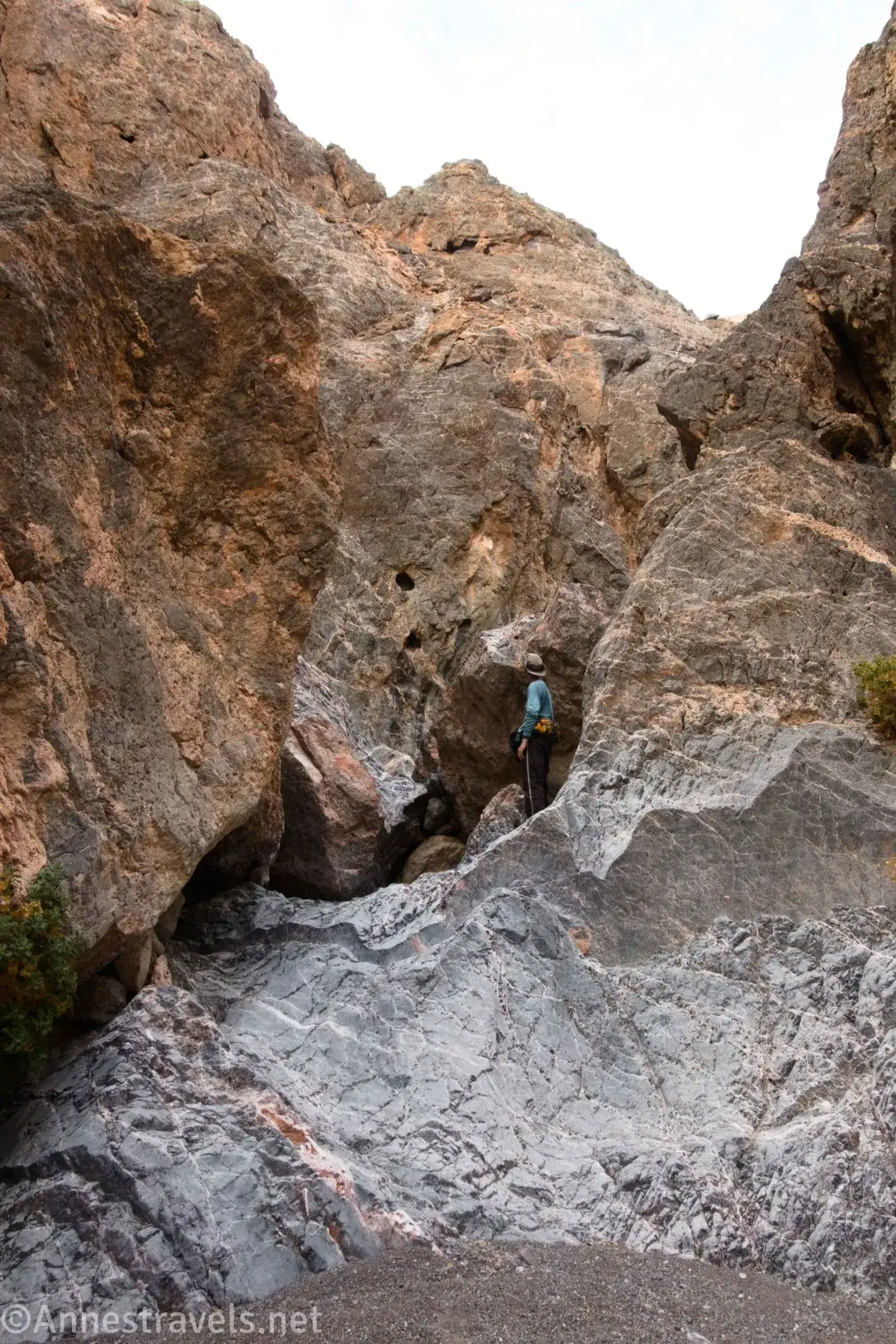
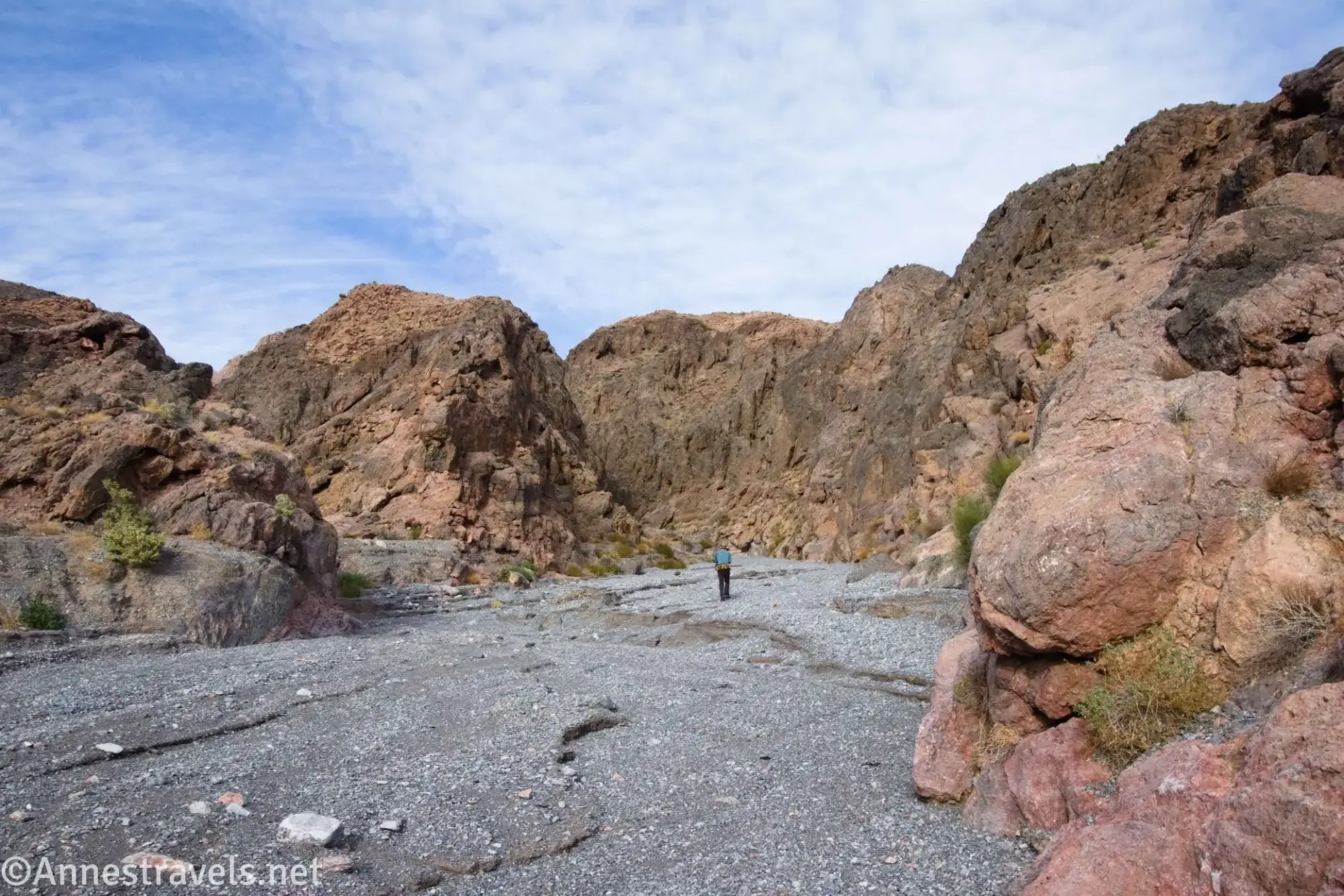
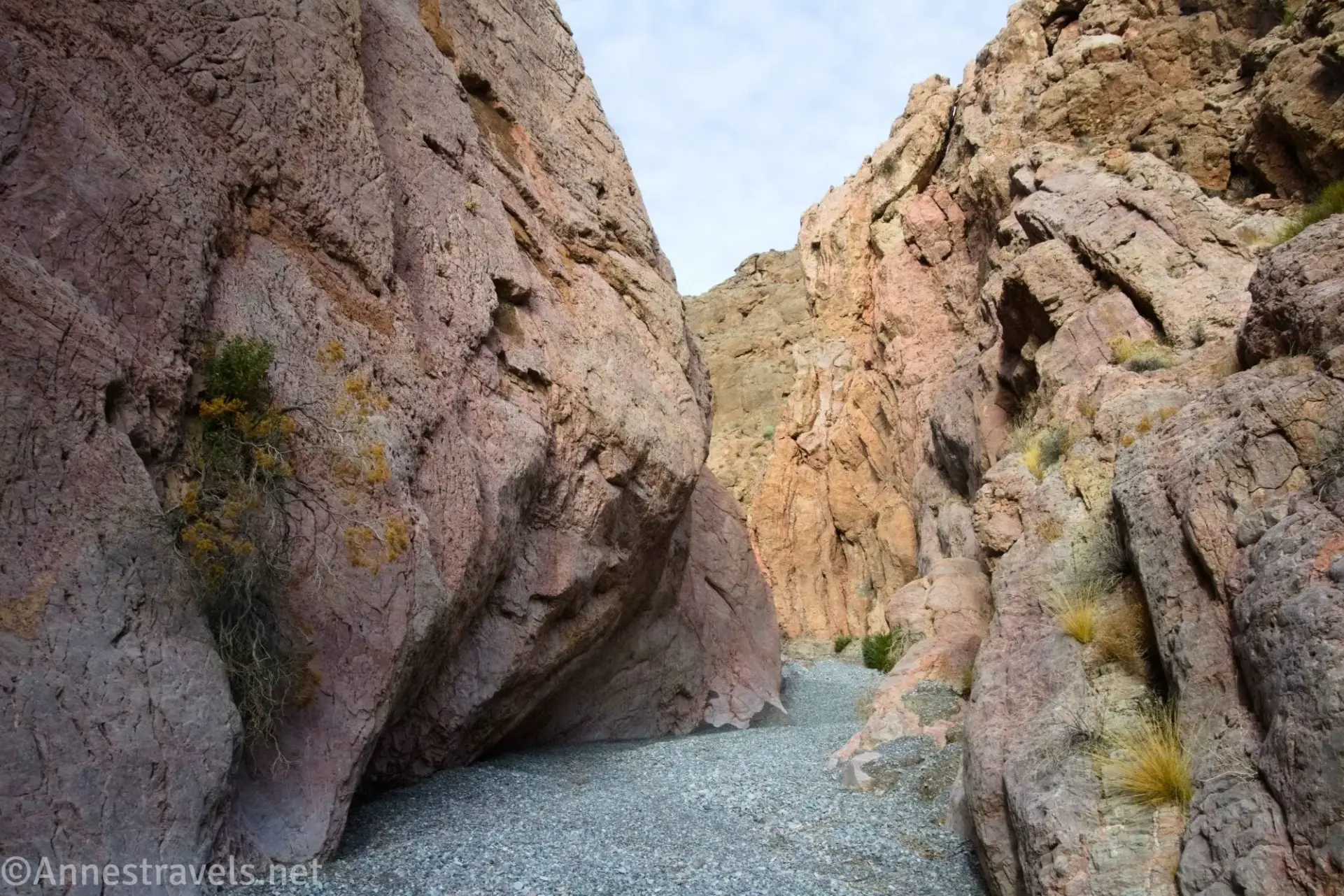
2.0 Drop into Palmer Wash (1,370ft.). Turn right (east) to walk up toward the mouth of Palmer Canyon. The first set of narrows begins almost immediately, finally narrowing down to a nice slot canyon. The tread is deep gravel, so give yourself extra time to slog through this. There is one five or six foot dryfall, but it’s not too hard to negotiate. After the canyon widens about 0.4 miles later, continue upcanyon, making sure to look back downcanyon at the Cottonwood Mountains. (36.840880°, -117.181261°)
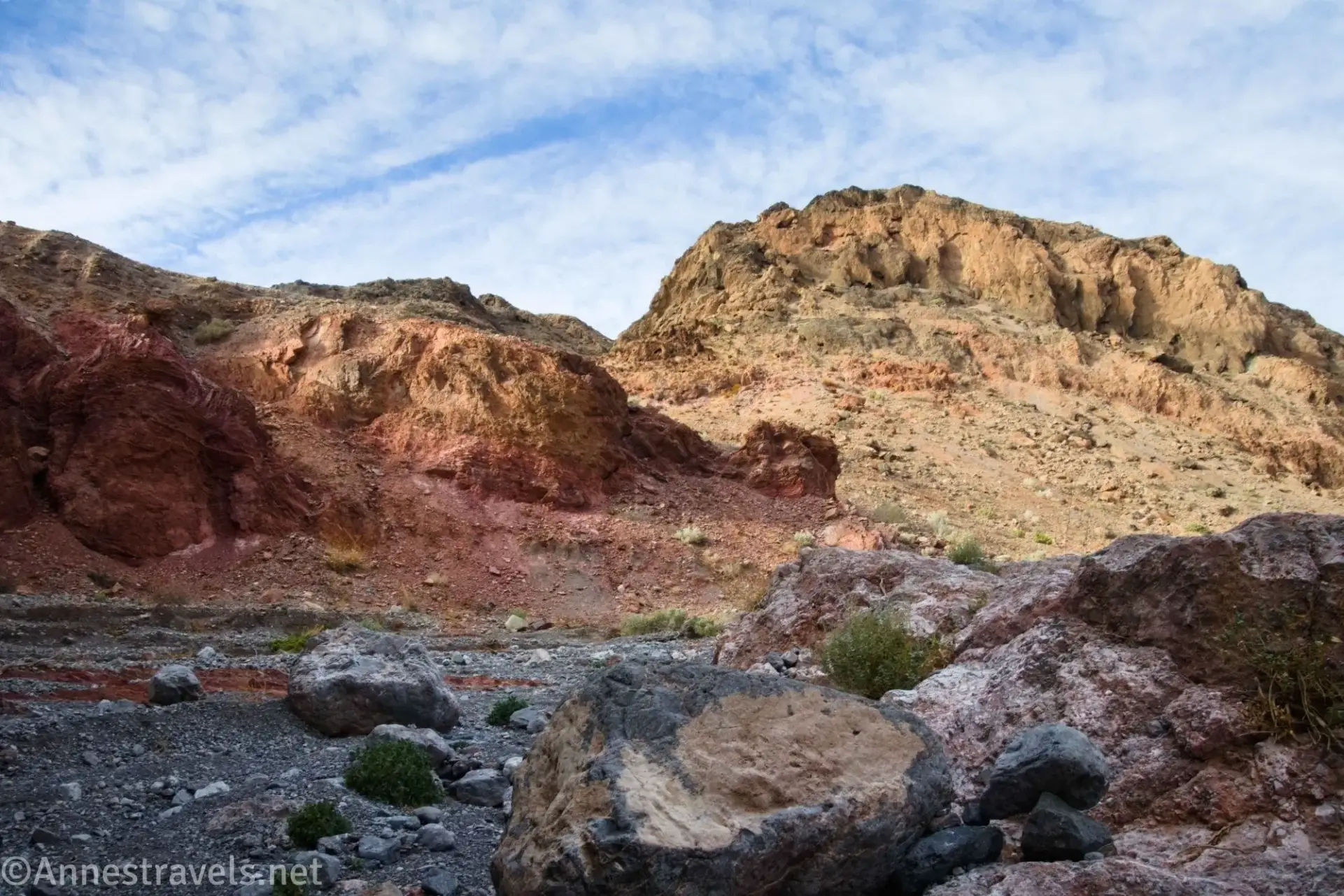
2.7 Second set of narrows (1,783ft.). Walk through this shorter and wider, but still pretty, narrows. In the middle of the narrows is a slick dryfall topped with boulders; it can be fairly easily climbed if you’re used to such things, though it’s slippery enough to stop some hikers. The canyon widens after about 0.2 miles; as the canyon widens, views are excellent to Mount Palmer and nearby peaks. Continue walking upcanyon toward the Gorge Area (simply an area that looks like a gorge as opposed to the current brushy wash, which is what Palmer Canyon has become). Just before entering this next feature, you’ll get a good glimpse of the towering Mount Palmer. (36.8451740°, -117.1748660°)
4.4 80ft. Dryfall (3,015ft.). This is the end of upcanyon travel from this angle (at least without rock climbing). I’ve heard that it’s possible to continue above the dryfall by backtracking 0.25 miles downcanyon to approximately 36.859201°, -117.1603383°. Exit the canyon on the north side, climb up to the ridgeline, and then walk north with the ridgeline for more than half a mile to find a place where you can safely climb down into the upper canyon. It might even be possible to climb Mount Palmer from the canyon, however, that would be a very long hike. (36.860970°, -117.157983°)
History & More
Don’t underestimate the difficulty of this hike. While it’s not all that hard as off-trail hikes go, the terrain can be difficult to follow and navigate. You should be proficient with off-trail desert travel and scrambling before attempting this route.
Palmer Canyon leads up to Mount Palmer, which is how it received its name from the National Park Service.
Per people who have explored the wilds of Death Valley in depth, Palmer Canyon is one of the most beautiful and impressive of the off-trail canyons you could visit. I wouldn’t give it that status, though it is one of the best off-trail canyons that’s more easily accessible.
Some visitors have had issues climbing the dryfall/boulder jam in the second narrows. Use care and don’t do anything you can’t climb back down.
I’ve intentionally left out some of the features you’ll find along the way – this is an adventure, and I wouldn’t want to give too many spoilers!
From where you drop into Palmer Wash, it’s fairly easy to walk down (yes, down!!) to the arches in Little Arches Canyon.
Download Route Map
Coming soon!
Driving Directions
Take Scotty’s Castle Road to the exit of the Titus Canyon Road (14.9 miles north of CA-190 and 18.3 miles south of the Grapevine Ranger Station). Turn east on the gravel Titus Canyon Road for 2.6 miles to the Titus Canyon Trailhead and Fall Canyon Trailhead parking.
Camping in a canyon is discouraged due to the danger of flash floods.
Remember, it may be easier to climb up dryfalls than down them (or vice versa). Be sure you can climb in the other direction before climbing up or down a dryfall.
Camping is not allowed within one mile of a paved road, developed area, or dirt road that is closed to camping.
Camping is not permitted within 100 feet of a flowing stream, spring, or other natural body of open water.
No camping is permitted on the floor of Death Valley, within one mile of Darwin Falls and Greenwater Canyon, on the active/shifting sand dunes, and certain other canyons and backcountry areas.
Camping is also prohibited within one mile of the Ubehebe Lead Mine, Leadfield Mines, Keane Wonder Mill, and Skidoo Mill.
Camping is limited to 30 days per calendar year within the park.
Fires are permitted in NPS-provided fire grates or grills ONLY.
Leave No Trace Principles are enforced
Drones and model aircrafts are prohibited
Camping is permitted only in designated sites or in areas open to dispersed backcountry camping
All park rules and regulations
12 Month Pass: $55/Death Valley Annual Pass (valid at Death Valley National Park). $80/America the Beautiful Annual Pass (valid at all national park and federal fee areas). $20/Annual Senior Pass (62 years or older US citizens; valid at all national park and federal fee areas). Free/4th Grade Pass (Valid Sept. 1-August 31 of the child’s 4th Grade school year). Free/Military Pass (valid for all active military personel and their dependents with a CAC Card or DD Form 1173).
Lifetime Pass: $80/Lifetime Senior Pass (62 years or older US citizens; valid at all national park and federal fee areas). Free/Access Pass (available to all US citizens with perminent disabilities). Free/Access for Veterans and Gold Star Families Pass (valid for all military and veterans with a CAC card, Veteran HJealth Identification Card, Veteran ID Card, or veteran’s designation on state-issued drivers license or identification card.)